The Best Implant Brands: Which One Should You Choose? (A Comprehensive Comparison Guide)
When researching implants, most patients get stuck on the same questions: Straumann, Nobel or Osstem? A local brand or a foreign one? Is the more expensive one really better? Should I trust whatever the clinic recommends?
These questions are entirely legitimate — because an implant is an investment that will stay in your mouth for decades. A wrong choice can mean not only lost money, but also lost time and a health risk.
In this guide, we cover the world's most widely used implant brands, the domestic alternatives manufactured in Türkiye, and the question "which brand suits whom?" — based on clinical facts, not marketing language.
Does the Implant Brand Really Matter?
The short answer: Yes, it does. But it is not as simple a subject as you might think.
Are All Implants the Same?
From the outside, all implants look alike: a titanium screw, an abutment, a crown. But this similarity is deceptive.
The real difference between implants begins at the surface — quite literally. The surface texture of the titanium screw directly determines how quickly and how firmly bone cells attach to the implant. Premium brands have invested millions of dollars in research on this surface technology over decades. Straumann's SLActive surface, Nobel Biocare's TiUnite surface and Osstem's SA surface — each offers a different osseointegration speed and success rate.
Beyond that, the purity grade of the titanium alloy, the screw geometry, the screw-abutment connection design and the manufacturing tolerances also differ significantly from brand to brand. The difference between a cheap implant and a premium one is not just the price tag; it is the clinical data, the manufacturing quality and the long-term success rate.
Does the Patient Choose the Brand, or the Dentist?
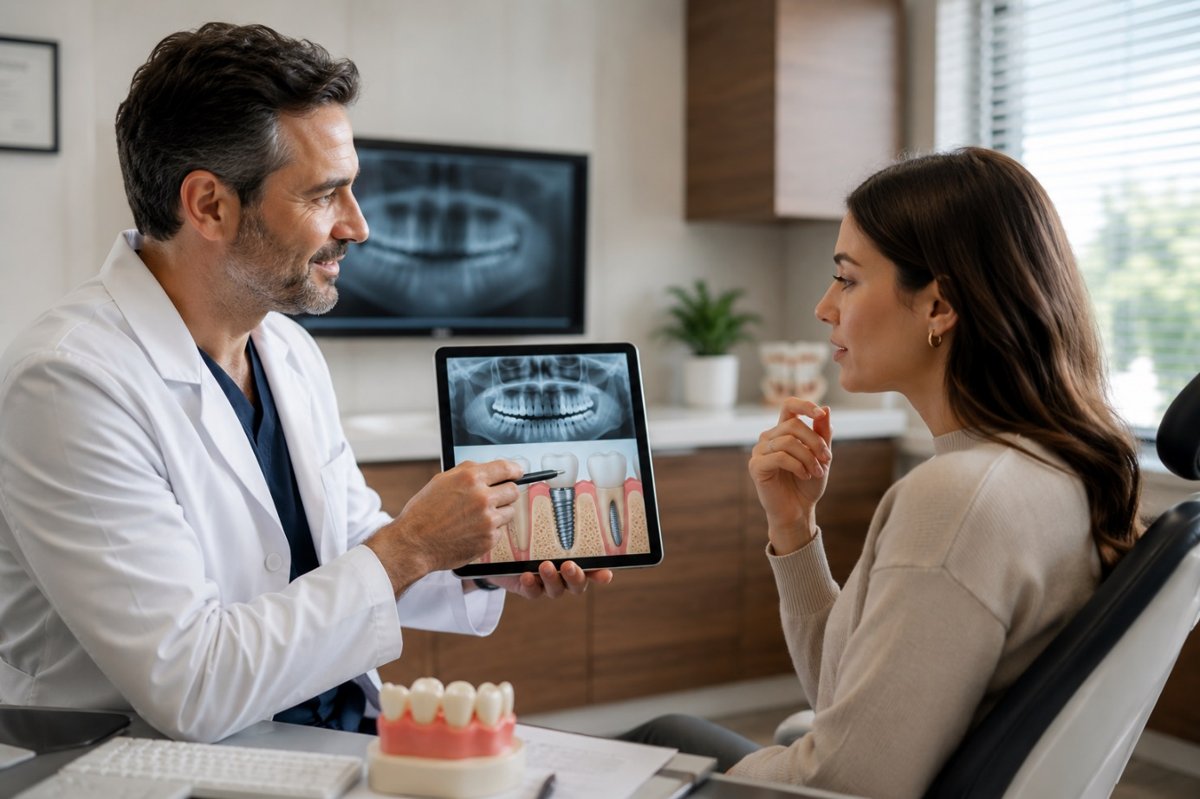
In reality, this decision largely belongs to the dentist — and that is natural. An experienced implantologist achieves much safer results with a brand system they have worked with for years, whose surgical protocols they have internalized and whose complication management they have learned.
However, this does not mean the patient should remain entirely passive. Asking the right questions — which brand, why this brand, is there clinical data — allows you to build healthy communication with your dentist and helps you make an informed decision.
It should also be stated: A mid-range brand used by the same dentist with the right indication can give better results than a premium brand used with the wrong indication. The brand matters; but the dentist's experience and correct case selection are at least as decisive as the brand.
5 Factors That Determine Brand Quality
1. Clinical Research History and Number of Publications: Behind a reliable implant brand there are decades of clinical data published in independent, peer-reviewed journals. A claim such as "95% success rate over 10 years" is meaningful only with such data.
2. Surface Technology: The surface texture of the titanium screw directly affects the speed and quality of osseointegration. Proprietary surface technologies such as SLA, SLActive, TiUnite and SA are concrete indicators of differentiation in this field.
3. FDA and CE Certification: The FDA certificate is mandatory for the US market and the CE certificate for the European market. These certificates are not just labels; they are proof that manufacturing standards, biocompatibility tests and clinical safety protocols have been audited.
4. Availability of Spare Parts and Long-Term Support: Your implant screw will stay in your mouth for decades. But when you need to replace the abutment or crown 15 years from now, will that brand still be on the market? Will you be able to get spare parts? Established brands offer this assurance; unknown brands cannot.
5. Global Distribution Network and Technical Support: If you have a problem with your implant after moving abroad or while travelling, that brand's global network comes into play. A patient with a Straumann or Nobel Biocare implant can find a clinic that knows the brand in virtually any country in the world.
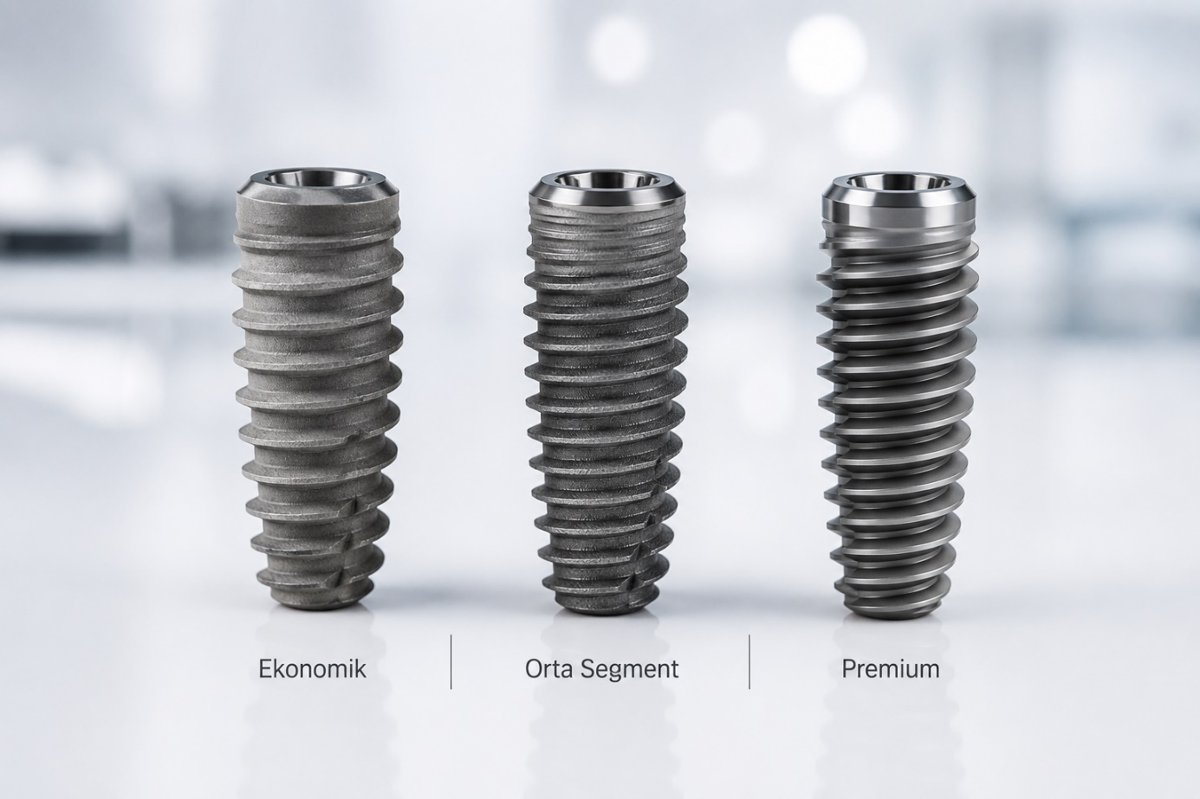
The Best Implant Brands Worldwide
Although the global implant market is full of hundreds of brands, those that stand out in terms of clinical data, research history and global usage are clear. Below we go through these brands — not with marketing promises, but with clinical facts.
Straumann (Switzerland) — The Industry Benchmark
Founded in Switzerland in 1954, Straumann has become a veritable yardstick in the world of implantology. Today it operates in more than 100 countries and remains the most frequently referenced brand in independent clinical studies.
The most critical technology that sets Straumann apart from its competitors is the SLActive surface. By shortening the osseointegration time from 6–8 weeks to 3–4 weeks compared with the standard SLA surface, it provides a clear advantage, especially in patients with poor bone quality and in accelerated protocols. In addition, Straumann's Roxolid alloy — a titanium-zirconium blend — offers 50% higher fracture resistance than standard titanium in narrow-diameter implants.
Who is it suitable for? The first choice for patients with low bone density, narrow bone structure, aesthetic-zone implants and cases requiring a fast-loading protocol. Price segment: Premium.Nobel Biocare (Switzerland/Sweden) — The Pinnacle of Aesthetics and Precision
Based on the work of Prof. Per-Ingvar Brånemark, the architect of the modern concept of osseointegration, Nobel Biocare has shaped the scientific foundation of implantology since 1952. Today it is regarded as the global standard, particularly in aesthetic-zone implants and full-arch rehabilitations (All-on-4, All-on-6).
Nobel's TiUnite surface speeds up the attachment of bone cells with its highly crystalline titanium oxide layer. The NobelActive series, with its self-tapping feature, provides strong primary stability even in soft bone tissue — a critical advantage in immediate loading protocols.
Who is it suitable for? Ideal for front-zone aesthetic implants, full-arch restoration cases, posterior areas with low bone density and implant-supported prosthetic work. Price segment: Premium.Dentsply Sirona / Astra Tech (Germany/Sweden) — Biomechanical Superiority
The Astra Tech implant system under Dentsply Sirona stands out particularly for its biomechanical durability, thanks to its OsseoSpeed surface and Conical Seal Design connection geometry. The conical design of the screw-abutment connection minimizes micro-movements and helps preserve the surrounding bone tissue — this feature has been clinically proven to reduce long-term marginal bone loss.
Who is it suitable for? Posterior areas under high occlusal load, patients with bruxism (teeth grinding) and cases where long-term bone preservation is the priority. Price segment: Premium-Mid.Osstem (South Korea) — The Balance of Price and Performance
Osstem was founded in South Korea in 1997 and today ranks among the top 3 worldwide in annual implant sales. Its use in Türkiye has also spread rapidly over the last 10 years.
Providing strong osseointegration with its SA surface, Osstem offers a wide product range with the flexibility to be applied to different bone types and different clinical scenarios. Clinical success rates have been reported in the range of 95–97% in independent studies — a figure that can compete with premium brands.
Who is it suitable for? Cases with standard bone structure that require multiple implants, and patients who prioritize the balance of price and performance. Price segment: Mid.Zimmer Biomet (USA) — Reliability with Orthopedic Roots
Zimmer Biomet is an American company whose roots lie in orthopedic implant manufacturing. This background, which carries over into its dental implant systems, makes the company's accumulated expertise in biomechanical engineering and materials science the brand's strongest asset. The Tapered Screw-Vent and T3 series have found wide use, particularly in the US and European markets, thanks to their broad range of indications and strong primary stability.
Who is it suitable for? Standard and complex cases; a system particularly preferred by US-trained dentists. Price segment: Premium-Mid.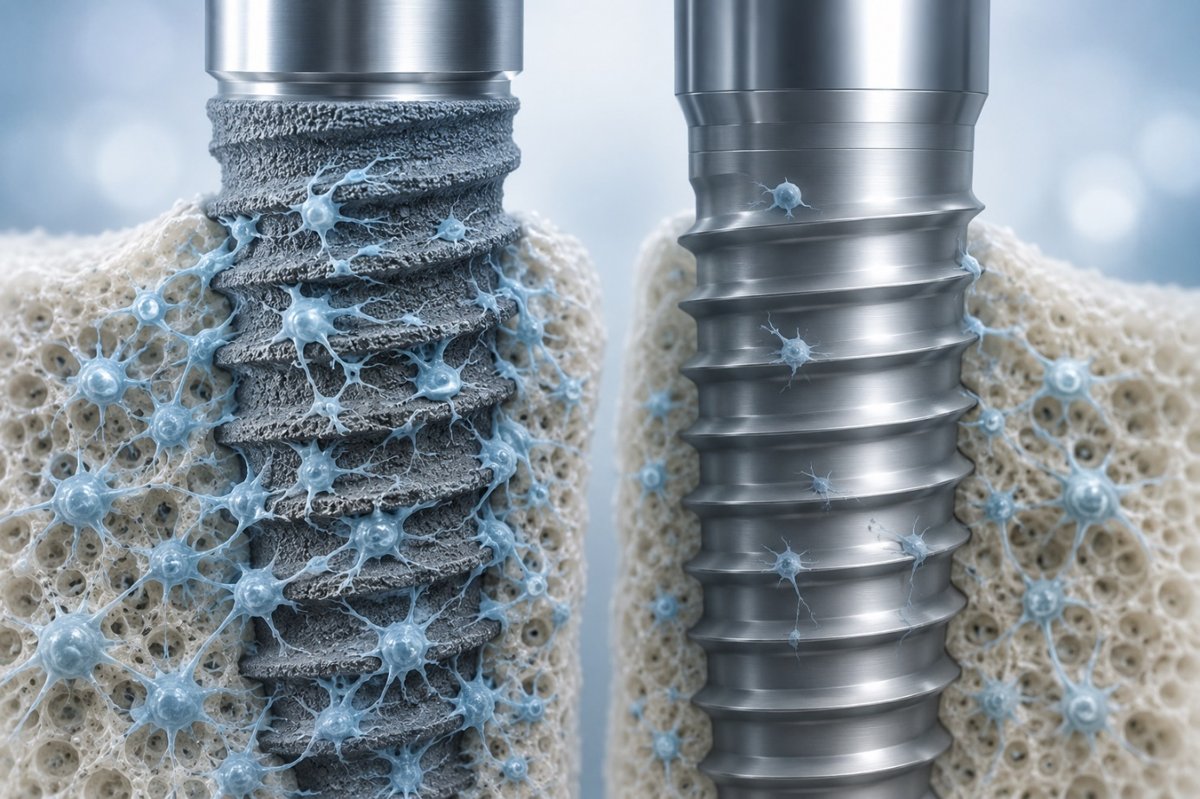
BioHorizons (USA) — Research-Driven Manufacturing
BioHorizons has carved out a unique place in the world of implantology with its Laser-Lok surface technology. This laser-machined microchannel surface encourages not only bone cells but also connective tissue cells to attach to the implant surface — a feature that provides a clinically meaningful advantage for marginal bone and soft tissue stability.
Who is it suitable for? Patients with a thin biotype (thin gums), aesthetic-zone implants and cases where soft tissue management is critical. Price segment: Mid-Premium.MIS Implants (Israel) — A Wide Range of Indications
Israel-based MIS has built a strong user base in the European and Middle Eastern markets, particularly with its V3 and Seven series. Its wide range of diameter and length options gives clinicians the flexibility to adapt to different bone anatomies. While it sits in a similar segment to Osstem in terms of price-performance balance, MIS's clinical research portfolio has expanded noticeably in recent years.
Who is it suitable for? Cases with wide variation in bone anatomy and multiple-implant applications. Price segment: Mid.Neodent (Brazil / Straumann Group) — The Leader of the Economy Segment
Neodent has been part of the Straumann Group since 2012. This relationship allows Neodent to benefit from Straumann's manufacturing standards and quality control infrastructure. The Grand Morse series has spread quickly, especially in emerging markets, thanks to its conical connection design and wide range of indications.
Who is it suitable for? Multiple-implant cases with a limited budget. Price segment: Economy-Mid.Domestic Implant Brands Manufactured in Türkiye
Türkiye has come a long way in implant manufacturing over the last 15 years. Today, several CE-certified brands produced domestically have a presence both in the local market and in export channels.
The General State of Implant Manufacturing in Türkiye
Implant manufacturers in Türkiye use medical-grade titanium as their raw material. The CE certificate requirement provides a basic guarantee in terms of manufacturing standards. However, the great majority of domestic brands do not yet have long-term independent clinical study data — this is the most obvious shortcoming compared with premium foreign brands.
That said, it must also be stated clearly: A domestic implant that is CE-certified, made from quality titanium and placed by an experienced dentist with the right indication can deliver satisfactory clinical results in standard cases.
Prominent Domestic Brands
Bego Implant Systems: German-origin Bego is a brand that manufactures in Türkiye and is used both domestically and in Europe. With its European clinical background, it can be considered to hold a hybrid position.
Implantmed / Ankadent: Among the Ankara-based manufacturers, these brands produce CE-certified titanium implants. The price advantage is clear; however, the number of independent clinical publications is limited.
Dentalium / TurkImplant: They are among Türkiye's export-oriented implant manufacturers. They sell particularly to the Middle East and North Africa markets.
Comparison of Domestic and Foreign Brands
Below we compare domestic and premium foreign brands on key criteria:
- Price: Domestic brands offer a clear advantage. Premium foreign brands are expensive.
- CE Certificate: Available in both groups.
- FDA Approval: Generally not found in domestic brands. Available in US-based foreign brands.
- Independent Clinical Data: Limited in domestic brands. Premium foreign brands have 10–30 years of comprehensive data.
- Surface Technology: Domestic brands use standard SLA. Premium brands use proprietary advanced surfaces such as SLActive and TiUnite.
- Global Spare Parts Availability: Limited for domestic brands. Premium brands are available in more than 100 countries.
- Long-Term Warranty: Varies for domestic brands. Widely offered by premium brands.
Who Is a Domestic Implant Suitable For, and Who Is It Not?
A domestic-brand implant can be a reasonable option in cases where the following conditions are present together:
- Standard bone density and anatomy (not a complex case)
- Situations where a budget limit is the deciding factor
- A clinical setting where an experienced dentist has used that brand for a long time
- Patients with no plans to travel abroad or relocate
On the other hand, in the following situations it is recommended to choose an established international brand instead of a domestic one:
- Systemic factors such as bone loss, diabetes or osteoporosis are present
- A front-zone aesthetic implant is planned
- An accelerated loading protocol will be applied
- The patient lives abroad or travels frequently
- Multiple implants or full-arch rehabilitation are involved
A Special Note for Health Tourism Patients
For patients coming to Türkiye from abroad for implant treatment, a domestic-brand implant is not recommended. When you need abutment replacement, crown replacement or complication management after returning to your country, you may encounter a brand system that local clinics do not recognize. Brands with a global network, such as Straumann, Nobel Biocare or Osstem, eliminate this risk.
Implant Brand Comparison
General Information About the Brands
Below, each brand's country of origin, surface technology, clinical data history, price segment and area of greatest strength are summarized:
- Straumann (Switzerland): SLActive / Roxolid surface. 70+ years of clinical data. Premium segment. Greatest strength: Bone loss, fast loading, narrow bone structure.
- Nobel Biocare (Switzerland/Sweden): TiUnite / NobelActive surface. 70+ years of clinical data. Premium segment. Greatest strength: Aesthetic zone, All-on-4/6.
- Dentsply Astra (Germany/Sweden): OsseoSpeed surface. 40+ years of clinical data. Premium-Mid segment. Greatest strength: Posterior zone, bruxism.
- BioHorizons (USA): Laser-Lok surface. 25+ years of clinical data. Mid-Premium segment. Greatest strength: Thin biotype, soft tissue management.
- Zimmer Biomet (USA): Tapered Screw-Vent surface. 40+ years of clinical data. Premium-Mid segment. Greatest strength: Standard and complex cases.
- Osstem (South Korea): SA surface. 25+ years of clinical data. Mid segment. Greatest strength: Multiple implants, balance of price and performance.
- MIS Implants (Israel): V3 / Seven series. 20+ years of clinical data. Mid segment. Greatest strength: Wide anatomical variation.
- Neodent (Brazil): Grand Morse series. 30+ years of clinical data. Economy-Mid segment. Greatest strength: Budget-focused multiple cases.
- Domestic Brands (Türkiye): Standard SLA surface. Limited clinical data. Economy segment. Greatest strength: Standard, budget-limited cases.
Brand Recommendations by Patient Profile
- Bone loss / low bone density: Straumann or Nobel Biocare. Why: Advanced surface technology, fast osseointegration.
- Front-zone aesthetic implant: Nobel Biocare or BioHorizons. Why: Experience with aesthetic protocols, soft tissue management.
- All-on-4 / All-on-6: Nobel Biocare or Straumann. Why: Global protocol standard, wide prosthetic options.
- Bruxism (teeth grinding): Dentsply Astra or Zimmer. Why: Biomechanical durability, conical connection design.
- Thin gum biotype: BioHorizons. Why: Laser-Lok surface, connective tissue attachment.
- Diabetes / systemic disease: Straumann or Nobel Biocare. Why: The most comprehensive clinical data, risk management protocols.
- Multiple implants, standard bone: Osstem, MIS or Neodent. Why: Balance of price and performance, wide indications.
- Health tourism patient: Straumann, Nobel or Osstem. Why: Global spare parts network, international recognition.
- Limited budget, standard case: Neodent or Osstem. Why: The assurance of the Straumann Group or a proven R&D infrastructure.
- Patient living abroad: Straumann or Nobel Biocare. Why: Service network in 100+ countries.
Price Ranges in the Turkish Market (2024–2025)
The figures below reflect the estimated total treatment cost including the implant screw + abutment + porcelain/zirconia crown. They may vary significantly depending on the clinic, the city and the complexity of the case.
- Premium segment (Straumann, Nobel Biocare): 25,000 – 45,000 ₺
- Mid-Premium segment (Dentsply Astra, BioHorizons, Zimmer): 18,000 – 28,000 ₺
- Mid segment (Osstem, MIS): 12,000 – 20,000 ₺
- Economy-Mid segment (Neodent): 10,000 – 16,000 ₺
- Economy segment (Domestic Brands): 7,000 – 12,000 ₺
Osseointegration Speed Comparison
- Straumann SLActive: Standard osseointegration 3–4 weeks. An accelerated protocol can be applied.
- Nobel NobelActive: Standard osseointegration 4–6 weeks. An accelerated protocol can be applied.
- Dentsply OsseoSpeed: Standard osseointegration 4–6 weeks. An accelerated protocol is possible in selected cases.
- BioHorizons Laser-Lok: Standard osseointegration 6–8 weeks. An accelerated protocol is possible in selected cases.
- Osstem SA: Standard osseointegration 6–8 weeks. An accelerated protocol is possible in selected cases.
- Domestic Brands: Standard osseointegration 8–12 weeks. An accelerated protocol is not recommended.
10-Year Success Rates
- Straumann: 97–98%. Multicenter randomized controlled trials and systematic reviews.
- Nobel Biocare: 96–98%. Long-term cohort studies.
- Dentsply Astra: 95–97%. Prospective clinical studies.
- BioHorizons: 95–97%. Independent clinical series.
- Osstem: 95–97%. Korean and European clinical studies.
- MIS: 93–96%. Limited independent data.
- Neodent: 94–96%. Studies supported by the Straumann Group.
- Domestic Brands: Independent publications are insufficient or nonexistent.
The Real Answer to "Which Implant Brand Is Better?"
This question crosses the mind of every patient researching implants. And the great majority of answers given online are either misleading, incomplete or nothing more than a clinic's advertising copy.
The real answer is this: There is no such thing as the "best brand." There is a best brand for you.
Why Is There No Single "Best Brand"?
Straumann, Nobel Biocare and Dentsply Astra — these three brands offer very similar success rates in terms of clinical data. The difference between them is not clinically significant in most standard cases.
So where does the difference emerge?
- In patients with poor bone quality: Straumann SLActive provides a clear advantage in osseointegration speed and success rate.
- In front-zone aesthetic cases: Nobel Biocare's richness of prosthetic options and experience with aesthetic protocols stand out.
- In patients with bruxism: Dentsply Astra's conical connection design reduces the risk of mechanical complications.
- In multiple-implant, standard cases: Osstem or Neodent deliver satisfactory results with their balance of price and performance.
- In patients living abroad: The brand with a global service network always takes priority.
So the right question is not: "Which brand is better?" The right question is: "Which brand is more suitable for my case, for my bone structure, for my living circumstances?"
The Dentist's Experience Matters More Than the Brand
This needs to be said because most sources ignore this reality:
The same Straumann implant can give two different results in the hands of two different dentists. The brand system that a dentist has worked with for 10 years, whose surgical protocols they have internalized and whose complication management they have learned — is the best system for that dentist.
For this reason, avoid the following scenario: Doing your research, going to the clinic having decided "I want Straumann," and having the brand placed by a dentist with limited experience with Straumann. This approach can give worse results than an Osstem in the hands of an experienced dentist.
The right approach:
- Evaluate the dentist's experience and references
- Ask which brand the dentist uses and for how long
- Assess together how well that brand suits your case profile
What Does It Mean When a Clinic Offers You a "Brand Choice"?
Some clinics offer patients a choice menu such as "German, Swedish or Domestic?" Although this approach seems superficial, it actually contains important information.
If a clinic works with multiple brand systems — this is an indication that it can adapt to different case profiles. However, if the brand choice is based solely on price difference — that is, if it is presented with the logic of "the cheap one is domestic, the expensive one is German" — this is a warning sign. The brand choice should be made according to clinical criteria, not according to a budget menu.
At the right clinic, you will hear this sentence: "After assessing your bone density and general health, we will recommend the most suitable system for you."
Beware of the Term "German Implant"
The term "German implant," frequently encountered in implant advertisements in Türkiye, most often points to Dentsply Sirona or Bego — but sometimes this term is used in an ambiguous way.
If a clinic recommends a "German implant" to you, ask these questions:
- What is the full name of the brand?
- Does it have a CE and/or FDA certificate?
- How many cases have you performed with this brand?
- Is 10-year clinical success data available?
A clinic that gives clear, confident and documented answers to these questions is the right clinic.
Summary: 5 Golden Rules in Choosing a Brand
1. The dentist's experience comes first. How many years and in how many cases the dentist has used that brand is more decisive than the brand's prestige.
2. Evaluate according to your case profile. Your bone loss, systemic disease, aesthetic expectations and living circumstances — these are the real factors that shape the brand choice.
3. Ask for clinical data. The question "What is the 10-year success rate?" should be answerable by every serious clinic.
4. Consider global accessibility. If you live abroad or travel frequently, brands with a global service network take priority.
5. Price alone cannot be the criterion. The cheapest implant can turn out to be the most expensive option in the long run. The most expensive implant, in turn, is not the best choice in every case.
Frequently Asked Questions (FAQ)
What is the difference between Straumann and Nobel Biocare, and which one should I choose?
Both brands have 70+ years of clinical history and a 10-year success rate in the range of 96–98%. The difference between them is not clinically significant in most standard cases. If bone loss or low bone density is involved, Straumann's SLActive surface and Roxolid alloy provide a clear advantage. If a front-zone aesthetic implant or All-on-4/6 is planned, Nobel Biocare's richness of prosthetic options stands out. In both cases, the dentist's experience with that brand is more decisive than the brand preference.
Is an Osstem implant reliable? Why is it so widespread?
Yes, it is reliable. Osstem's widespread use does not stem from its price advantage alone. The company makes serious R&D investments; in independent clinical studies, a 10-year success rate in the range of 95–97% has been reported. This figure can compete with premium brands. It is a strong option in cases with standard bone structure that require multiple implants. In complex cases involving bone loss or requiring an accelerated loading protocol, however, premium brands should be preferred.
What does "German implant" mean? Which brands are German?
The term "German implant," frequently used in clinic advertisements in Türkiye, mostly points to Dentsply Sirona or Bego. However, this term is at times used in an ambiguous way. If a clinic recommends a "German implant" to you, be sure to ask for the full name of the brand, its CE/FDA certificate and how many years of experience there are with that brand.
Should I choose a domestic or a foreign implant?
CE-certified domestic implants can be a reasonable option for patients with standard bone structure, a limited budget and no plans to travel abroad. However, if bone loss or a systemic disease is present, a front-zone aesthetic implant is planned, an accelerated loading protocol will be applied or the patient lives abroad, an international brand is recommended. The most obvious shortcoming of domestic brands is that long-term independent clinical study data has not yet accumulated sufficiently.
Should I choose the implant brand, or the dentist?
This decision largely belongs to the dentist, and that is natural. However, as a patient, asking these questions is both your right and your responsibility: Which brand do you use? Why do you prefer this brand? How many cases have you performed with this brand? A dentist who answers these questions openly and confidently is the right dentist.
Is an expensive implant always better?
No. Price is a necessary but insufficient indicator of quality. The most expensive implant can fail when placed with the wrong indication or in the hands of an inexperienced dentist. On the other hand, a mid-range brand used by an experienced dentist with the right indication can give satisfactory long-term results. Make your comparison by asking separately about the components that determine the price — implant brand, abutment type, crown material.
How long does an implant last? Does the brand affect this?
A properly placed and well-maintained implant can be used for a lifetime. With premium brands, 20–30 year success rates have been clinically documented. The brand affects this duration, but it is not the only determinant. Other factors that affect implant lifespan are: the dentist's surgical experience, the patient's oral hygiene habits, smoking, systemic diseases and the frequency of regular check-ups.
I am coming to Türkiye for health tourism — which brand should I choose?
For patients coming to Türkiye from abroad for implant treatment, Straumann, Nobel Biocare and Osstem are the safest options. The main reason is the global service network: for abutment replacement, crown replacement or complication management that may arise after you return to your country, a brand system recognized by local clinics is of critical importance. It is also recommended that you request a written treatment plan before treatment that covers all components of the implant system.
Let's Determine the Right Implant Brand for You Together
Get a free consultation with our specialist dentists for the implant system best suited to your bone structure and needs.
Book an Appointment