What Are Gum Diseases? Symptoms, Types and Treatment Methods
Has a few drops of blood in the sink while brushing your teeth in the morning ever made you stop and think? Many people accept this as "normal" and never give it a second thought. Yet bleeding gums are one of the clearest warning signals your body can give you.
Gum diseases are a group of conditions that, when neglected, can pave the way for tooth loss and even systemic problems such as heart disease and diabetes, but that can be brought fully under control when diagnosed early.
In this article, we will look at what gum diseases are, their types, symptoms, causes and current treatment methods from an expert perspective. You will be able to assess yourself and communicate with your dentist in a more informed way.
What Is Gum Disease?
Gum disease, known technically as periodontal disease, is a group of infectious conditions that affect the tissues surrounding and supporting the teeth: the gums, the periodontal ligament and the alveolar bone. At the root of the disease lies the buildup of bacterial plaque in the mouth. Over time, this plaque hardens into tartar; and because tartar cannot be removed with a household toothbrush, it requires professional intervention.
The disease progresses through two main forms. The first stage, gingivitis, affects only the gums and can be completely reversed with the right treatment. When left untreated, however, the disease progresses to periodontitis; at this point bone and connective tissue loss begins, and these losses can become permanent.
According to World Health Organization data, one in every two adults worldwide encounters gum disease at some point in their life. In Turkey, it is estimated that around sixty percent of adults over the age of 35 have periodontal problems of varying degrees. Despite being this common, many people live with the disease for years without even realizing it.
Why Is Periodontal Disease So Important?
Viewing gum disease as an ordinary oral health problem is a big mistake. Research over the last twenty years has shown that periodontal disease has a strong two-way relationship with cardiovascular disease, diabetes, premature birth and even Alzheimer's disease. Inflammation in the mouth spreads to the rest of the body as well; in other words, protecting your gums is synonymous with protecting your overall health.
What Is the Difference Between Gingivitis and Periodontitis?
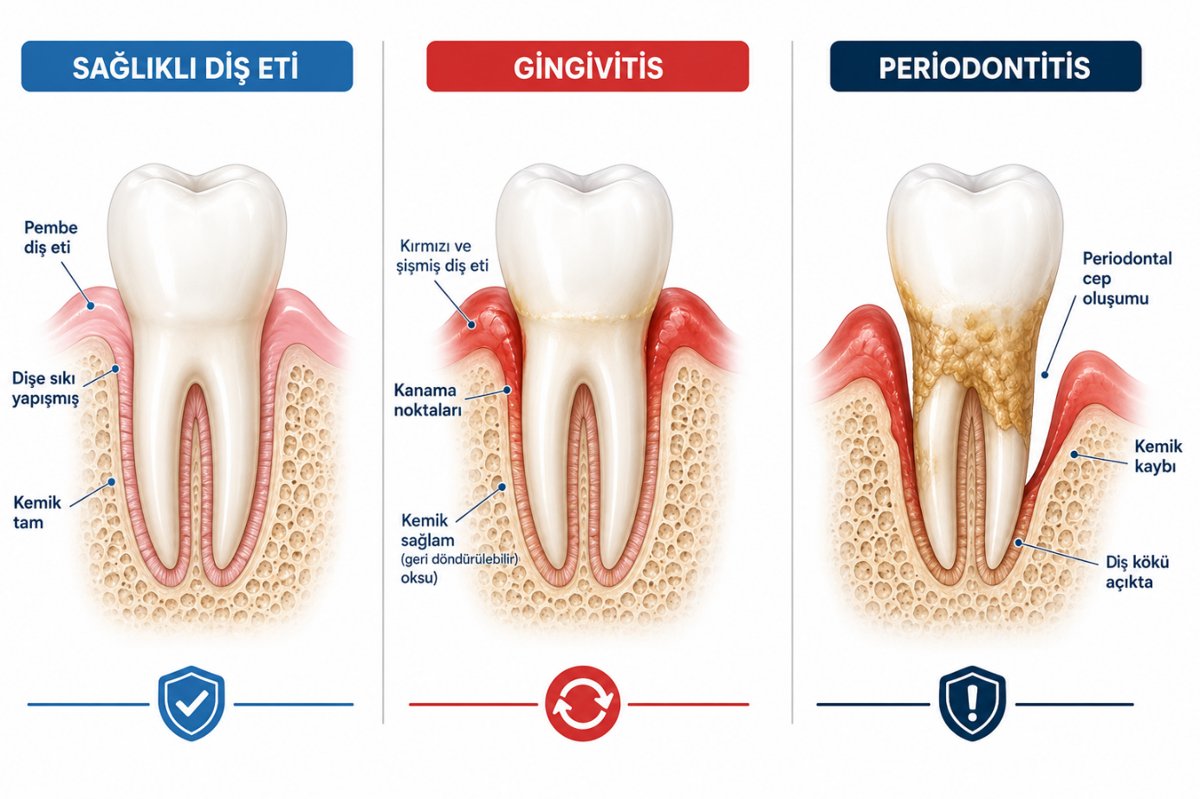
These two terms are often confused with each other. Gingivitis is a superficial inflammation of the gums. The gums become red, swollen and bleed; however, the bone and connective tissue have not yet been damaged. At this stage, the disease is fully reversible. Periodontitis, on the other hand, is a deeper stage of the disease. The gum separates from the tooth and forms spaces called "periodontal pockets"; the bacteria that accumulate in these pockets slowly destroy the underlying bone and connective tissue. Lost bone does not grow back on its own, and if left untreated it leads to gaps between teeth and eventually to tooth loss.
Types of Gum Disease
Periodontal diseases are not of a single type. According to the classification system updated by the American Academy of Periodontology (AAP) in 2017, these diseases are evaluated under several clinical pictures. Each has its own symptoms, rate of progression and treatment requirements.
Gingivitis
This is the most common and earliest stage of periodontal disease. It appears when oral hygiene deteriorates and can easily be reversed with regular dental cleaning. There is no bone loss; the gums are tender, red and prone to bleeding.
Chronic Periodontitis
This is the most common form of periodontal disease in adults. It progresses slowly and can remain silent for many years. Over time, as the periodontal pockets deepen, gum recession and alveolar bone loss are observed. Pain is usually absent, which makes it difficult to notice.
Aggressive Periodontitis
As its name suggests, this is a fast-progressing form that can occur even at a young age. It can cause severe bone loss even in individuals with relatively good oral hygiene. Genetic predisposition plays a decisive role in this form.
Hormonal Gingivitis
In people who are pregnant, going through puberty or menopause, or using hormonal birth control, gum tissue becomes much more sensitive to hormonal fluctuations. During pregnancy, harmless gum overgrowths known as "pregnancy tumors" may also occur.
Necrotizing Periodontal Diseases (NUG/NUP)
Seen in people with weakened immune systems, those under extreme stress or smokers, this form reveals itself through the collapse of the gum papillae. The pain is severe and ulcer-like lesions form in the mouth. It requires urgent treatment.
Gingival Recession (Gum Recession)
This is the pulling back of the gum so that the root of the tooth is exposed. It causes discomfort both aesthetically and because of sensitivity problems. A habit of brushing too hard, bruxism and periodontal disease are among the main causes. Receded gum does not grow back on its own.
Peri-implantitis
This is a critical condition that people with dental implants should not overlook. Just like periodontitis around natural teeth, it leads to bone and tissue loss around the implant. Peri-implantitis, which is the start of the process leading to implant loss, can be brought under control when treated in time.
Symptoms of Gum Disease
The insidious side of gum disease is that it can progress for a long time without giving any signs. Pain usually appears at a stage when the disease is quite advanced. For this reason, recognizing the early symptoms is very important.
Symptoms That Can Be Noticed in the Early Stage
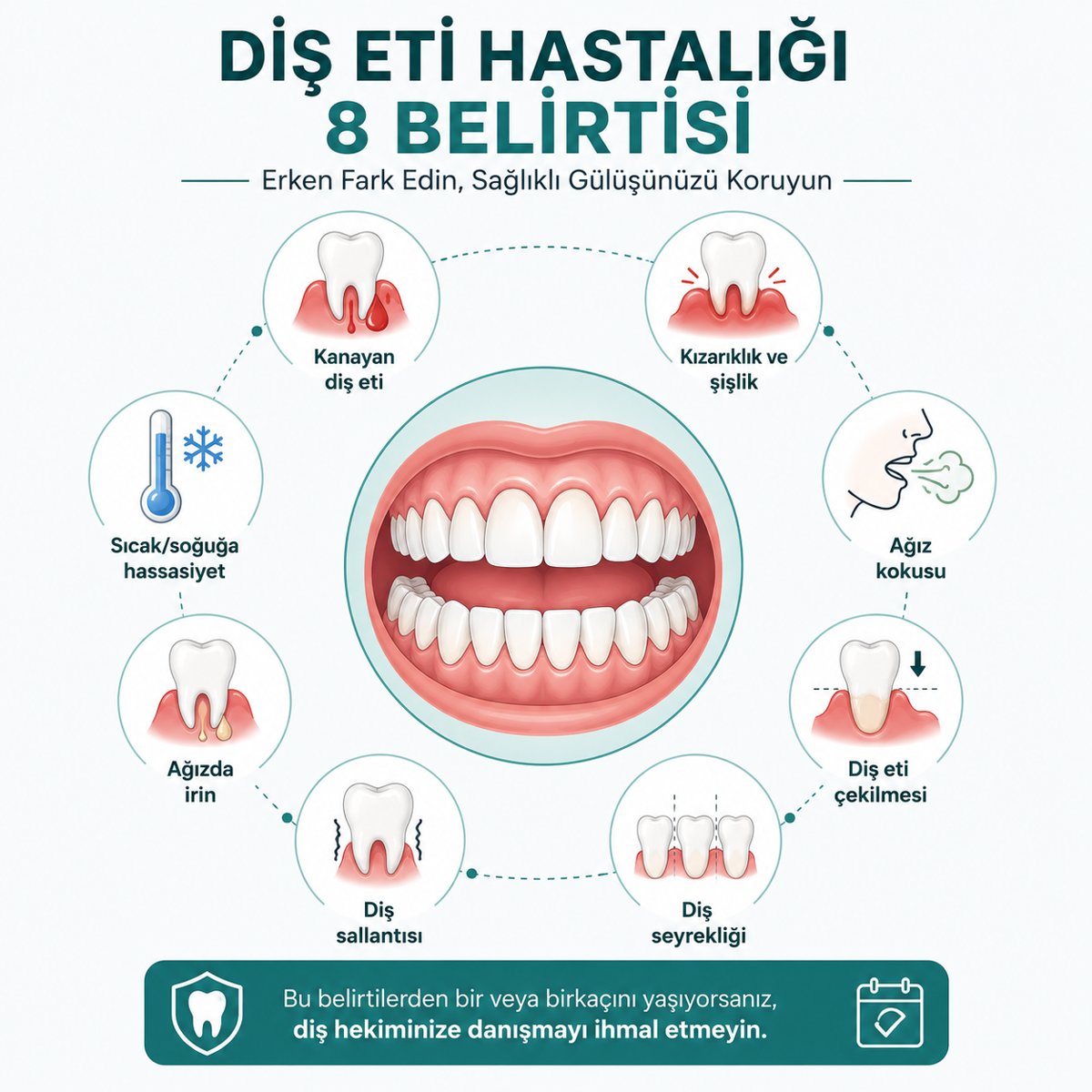
- Bleeding from the gums when brushing or flossing
- Redness, swelling or tenderness in the gums
- Noticeable and persistent bad breath in the morning (halitosis)
- Gums looking paler than normal or dark red
- Gums feeling swollen regardless of brushing
- Yellow-brownish tartar buildup becoming visible on the tooth surfaces
Symptoms Seen in the Advanced Stage That Require Urgent Intervention
- Noticeable gaps between teeth or shifting of teeth
- A feeling of looseness in the teeth
- Pocket formation between the gum and tooth, with pus collecting in this area
- Extreme sensitivity to cold, hot or sweet foods (caused by exposure of the tooth root)
- Pain or discomfort when chewing
- Visible gum recession, with the teeth appearing "longer"
How Can You Assess Your Gum Health at Home?
When you examine your gums in the mirror, healthy gums are light pink, firmly attached to the teeth and smooth in appearance. If your gums are dark red or purple, seem to be pulling away from the teeth, hurt when you apply pressure, or if you have had a bad odor for several days, you need to see a periodontology specialist. If three or more of these symptoms are present at the same time, we recommend booking an appointment within 48 hours.
Causes of Gum Disease
The Main Cause: Plaque and Tartar Buildup
At the foundation of gum disease lies the buildup of bacterial plaque. Hundreds of species of bacteria that are constantly present in our mouths combine with food residue and saliva to form a thin film on the tooth surfaces. This film, known as plaque, can be removed if you brush regularly and with the correct technique twice a day. However, plaque that is not cleaned hardens within 24-72 hours and turns into tartar. Once tartar has formed, it can only be removed by a dentist using special instruments.
Risk Factors
Gum disease is not only the result of poor oral hygiene. Many factors trigger or accelerate the disease:
- Smoking and tobacco use: It impairs blood flow in the gum tissue, weakens the immune response and negatively affects the response to treatment. The risk of periodontitis is three to six times higher in smokers than in non-smokers.
- Diabetes: In diabetic patients whose blood sugar control deteriorates, susceptibility to gum infections increases significantly. Moreover, poorly controlled gum disease also negatively affects blood sugar; this two-way relationship is discussed separately below.
- Genetic predisposition: Individuals with a family history of tooth loss have a higher risk of developing periodontal disease.
- Hormonal changes: Puberty, pregnancy, menopause and hormonal birth control medications make the gums more sensitive.
- Stress: Chronic stress suppresses the immune system and reduces the body's resistance to bacteria.
- Certain medications: Some antihypertensives, antidepressants and epilepsy medications can cause gum overgrowth or dry mouth, creating periodontal risk.
- Inadequate nutrition: Vitamin C deficiency negatively affects connective tissue health and reduces the repair capacity of the gums.
- Bruxism (clenching/grinding the teeth): Excessive mechanical load on the teeth strains the periodontal tissues and makes it easier for the disease to progress.
The Link Between Gum Disease and Overall Health
This section covers an area that most competing content completely ignores, but that research increasingly emphasizes. The mouth is not an area isolated from the rest of the body. Bacteria in the mouth can enter the bloodstream and trigger inflammatory processes in distant organs.
Gum Disease and Heart Disease
Research shows that the risk of coronary heart disease is twenty-five to thirty percent higher in people with periodontal disease. Bacteria that create chronic inflammation in the mouth, especially Porphyromonas gingivalis, can enter the bloodstream and contribute to atherosclerosis in the blood vessel walls. Cardiologists now also recommend that everyone who cares about heart health should treat oral health with the same seriousness.
The Vicious Cycle of Diabetes and Periodontitis
There is a two-way relationship between diabetes and periodontal disease. High blood sugar makes tissue repair harder and lowers resistance to infections, worsening gum disease. On the other hand, active periodontal disease increases insulin resistance through systemic inflammation and makes it harder to bring blood sugar under control. For this reason, it is particularly important for diabetic patients to have a periodontal examination every six months.
Risks of Gum Disease During Pregnancy
A statistically significant relationship has been identified in pregnant women between periodontal disease and preterm birth (premature birth) and low birth weight babies. The rising progesterone and estrogen levels during pregnancy make the gums more vulnerable to bacteria. For this reason, at least one periodontal check-up during pregnancy is recommended.
Alzheimer's Disease and Periodontal Bacteria
Research in recent years has revealed that the periodontal bacterium Porphyromonas gingivalis has been detected in the brain tissue of Alzheimer's patients. Enzymes called "gingipains" produced by this bacterium can cause neuronal damage. Although research has not yet established a definite causal relationship, the findings are noteworthy in that they point to the potential effect of oral health on brain health.
Treatment Methods for Gum Disease
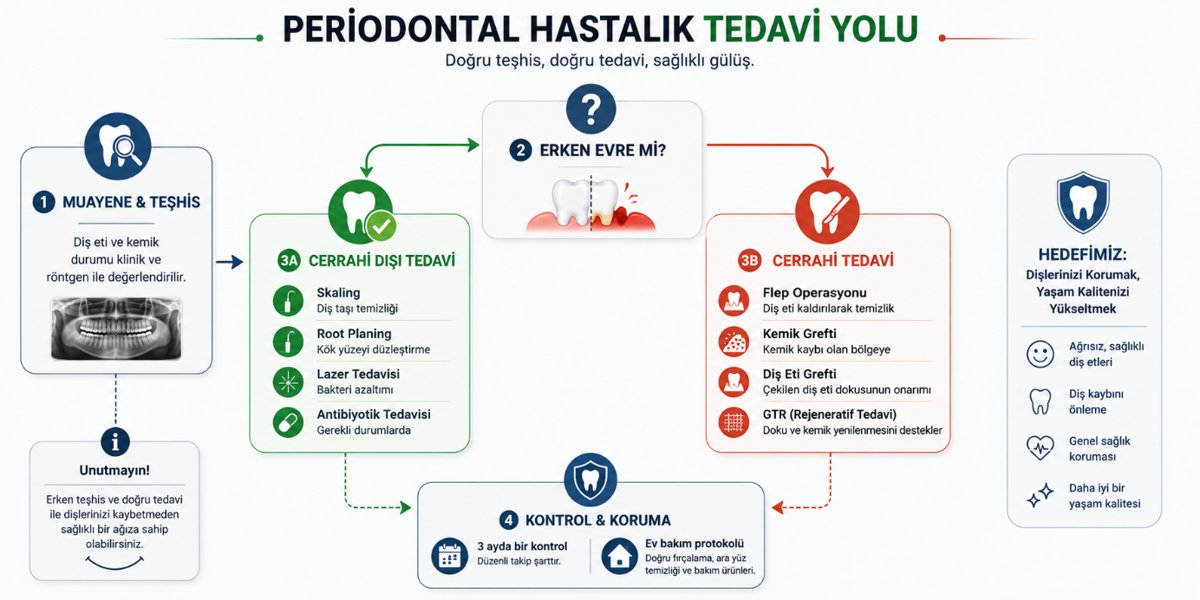
The treatment of gum disease varies depending on the stage of the disease. While very successful results are obtained with non-surgical methods in the early stages, surgical intervention may become unavoidable in advanced stages.
Non-Surgical Treatments
Professional Dental Cleaning (Scaling): This is the first-choice method in cases of gingivitis and early-stage periodontitis. The dentist or periodontist uses special hand instruments or ultrasonic devices to clean tartar deposits on the tooth surfaces and in the gum pockets. It is recommended at least twice a year; however, during an active periodontal disease process it may need to be repeated at three- to four-month intervals.
Root Surface Smoothing (Root Planing): This is one step beyond scaling. Bacterial deposits and damaged tissue stuck to the root surface of the tooth inside the gum pocket are cleaned with special instruments called curettes. By smoothing the root surface, it becomes harder for bacteria to reattach. The procedure is performed comfortably under local anesthesia.
Antibiotic and Antiseptic Treatment: Systemic or local antibiotics (such as antibiotic gels placed into the periodontal pockets) accompany scaling and root planing procedures in some cases. The aim is to reduce the bacterial load and support the body's own repair mechanisms.
Laser Gum Treatment: The use of laser technology in gum treatment is becoming increasingly common. The laser selectively targets the diseased tissue and bacteria inside the periodontal pocket without harming healthy tissue. Compared with conventional methods, it offers less bleeding, less pain and a faster healing process. Laser treatment is not a standalone treatment, but is used as a complementary approach to conventional periodontal treatment. It is particularly effective in early and moderate stage periodontitis cases.
Surgical Treatments
Surgical intervention may be needed when the disease has progressed to an advanced stage, when periodontal pockets exceed 5-6 millimeters, or when there is serious bone loss.
Flap Surgery (Open Curettage): This is the most commonly performed periodontal surgical procedure. The gum is lifted and folded back to access the area underneath (a flap is created). In this way, the root surfaces and bone tissue are seen directly and cleaned. After the procedure, the gum is sutured closed. This method gives far more effective results for areas that cannot be reached with scaling and root planing.
Bone Grafting: A bone graft is applied to rebuild alveolar bone lost due to periodontitis. The graft material used may come from the patient's own bone, from processed donor-derived bone or from synthetic materials. Over time, the graft integrates with the patient's natural bone tissue and fills the lost area. This method is an extremely valuable option for saving teeth, especially in advanced-stage gum disease.
Gum Grafting: It is performed to cover root surfaces left exposed due to gingival recession (gum recession) and to achieve both aesthetic and functional results. The graft material is usually taken from the palate and placed over the exposed root area. In successful cases, both the sensitivity problem is resolved and an aesthetically satisfying appearance is achieved.
Guided Tissue Regeneration (GTR): To encourage the regrowth of bone and connective tissue, a membrane is placed to prevent unwanted tissues from entering the area, allowing the periodontal supporting tissue to re-form. In advanced bone loss, it can be applied together with a bone graft.
What Should You Expect During the Healing Process After Treatment?
After non-surgical treatments, mild sensitivity and swelling for a few days are considered normal. The initial healing process is usually completed in one to two weeks. After surgical procedures, this period can extend up to three to four weeks. The success of treatment depends largely on the patient's home care: the tooth brushing technique recommended by the dentist, flossing and regular attendance at follow-up appointments are the cornerstones of long-term success.
Preventing Gum Disease
The vast majority of gum diseases are preventable. Regular and correct oral care together with an annual check-up habit are enough to stop these diseases before they develop.
Correct Tooth Brushing Technique
The method most recommended by dentists is the Bass technique. Place the bristles at the tooth-gum line at a 45-degree angle and brush each group of teeth with small, vibrating movements for ten to fifteen seconds. The basic rule is to brush twice a day, morning and evening, for at least two minutes each time. Avoid using a hard-bristled brush; medium or soft-bristled brushes should be preferred. Electric toothbrushes can be more effective than manual brushes for individuals prone to gum problems.
The Role of Dental Floss and Mouthwash
A toothbrush can clean only sixty percent of the surface area between the teeth. The remaining forty percent, that is, the spaces between teeth and the entrances of the gum pockets, can only be cleaned with dental floss or interdental brushes. These areas are where plaque buildup happens fastest and where gum disease starts first. Antibacterial mouthwashes, on the other hand, should be regarded not as a treatment tool on their own but as a supplement that supports brushing and flossing.
The Effect of Nutrition on Gum Health
Foods rich in vitamin C (citrus fruits, peppers, broccoli) are critical for connective tissue health. Limiting the consumption of sugary and acidic foods slows plaque formation. Catechins found in green tea have been found effective against periodontal bacteria in in vitro studies. Drinking enough water prevents dry mouth and limits the growth of bacteria.
How Often Should You See the Dentist?
As a general rule, professional dental cleaning and a periodontal check-up are recommended every six months. However, for individuals with active periodontal disease, who smoke or who are diabetic, this interval should be reduced to three to four months. For children, the first dental visit should take place within one year of the first tooth erupting.
Frequently Asked Questions About Gum Disease
Does gum disease go away on its own?
If it is at the gingivitis stage, reversal is possible with regular and correct oral care. However, if it has progressed to the periodontitis stage, the disease will not heal on its own; professional treatment is essential. Waiting paves the way for bone loss to progress.
Is gum disease contagious?
The bacteria that cause the disease can be passed to other people through kissing, shared utensils or a shared toothbrush. However, a person acquiring the bacteria does not mean the disease will necessarily develop; the individual's immune status and oral hygiene are decisive.
Does gum disease definitely cause heart disease?
Although current research shows a strong association, a definite causal relationship has not yet been fully proven. Nevertheless, many cardiology associations recommend regular periodontal care as part of protecting heart health.
How long does gum disease treatment take?
Gingivitis can be brought under control within a few weeks with one to two professional cleaning sessions and regular home care. For mild-to-moderate periodontitis, two to four sessions of scaling and root planing are performed; the results of this treatment are evaluated within two to three months. In advanced surgical cases, the overall process can extend over several months, and follow-up check-ups continue over the long term.
Will receded gums grow back?
Receded gum does not grow back on its own. In mild cases, eliminating the cause (stopping hard brushing, correcting an occlusion problem) can halt progression. In more pronounced recession, aesthetically and functionally successful results can be achieved with gum graft surgery.
How does gum disease affect pregnancy?
Bacteria and inflammatory mediators originating from periodontal infection can reach the placenta through the bloodstream and increase the risk of premature birth and low birth weight. For this reason, those planning a pregnancy and pregnant women are advised to make a periodontal examination a priority.
Which doctor should you see for gum disease?
A periodontology specialist, that is, a periodontist, is the expert in this field. However, early symptoms can usually also be detected by a general dentist, who can refer you to a periodontist when necessary. In complex or advanced-stage cases, going directly to a periodontology clinic speeds up the process.
Is laser gum treatment really effective?
Yes, especially in early and moderate stage periodontitis cases, laser treatment gives results comparable to conventional methods, and in some studies it has been observed to provide a faster healing process. However, in advanced-stage bone loss, laser alone is not sufficient and surgical intervention may be needed.
Is gum treatment painful?
Thanks to modern anesthesia methods, scaling, root planing and surgical procedures are carried out painlessly during the procedure. After the procedure there may be mild sensitivity and swelling for a few days; this can be managed easily with painkillers.
Does my insurance cover gum treatment?
The SGK (Turkish social security institution) covers scaling (tartar cleaning) under certain conditions. Most advanced periodontal surgical procedures, on the other hand, may fall under private insurance coverage. We recommend that you clarify your insurance status with your clinic before treatment.
Conclusion
Gum diseases are conditions that can lead to devastating consequences when ignored, but that can be largely prevented or kept under control with the right information and regular care. Bleeding gums may seem like a small sign; yet when assessed in time, this small sign can save a tooth of yours, or even more.
Early diagnosis always means fewer procedures, a shorter treatment period and much lower cost. Thanks to regular check-ups, the disease is caught before it becomes serious; this both reduces the need for surgical intervention and minimizes systemic health risks in the long term.
If you have noticed any symptom related to your gums, or if you cannot remember when you last had a periodontal examination, now is exactly the time to take the right step for yourself.
Book Your Free Periodontal Examination Appointment
Let our specialist periodontist assess your gum health. Fill out our appointment form and we will call you within 24 hours. You can also send a photo of your gums via WhatsApp and receive a personalized assessment from our expert team.
Book an Appointment Send via WhatsAppThis content has been reviewed by dentists who are specialists in periodontology, is based on current scientific sources and has been prepared for informational purposes only. Please consult a periodontology specialist for diagnosis and treatment.