What Is a Dental Implant? Who Is a Candidate? A Comprehensive Guide
Everyone who loses a tooth asks the same question: "What do I do now?" A bridge, a denture, or an implant? In this guide, we cover everything you may want to know about dental implants, in clear and simple language: what they are, how they are placed, who they suit, and which factors affect the price.
What Is an Implant? Basic Concepts
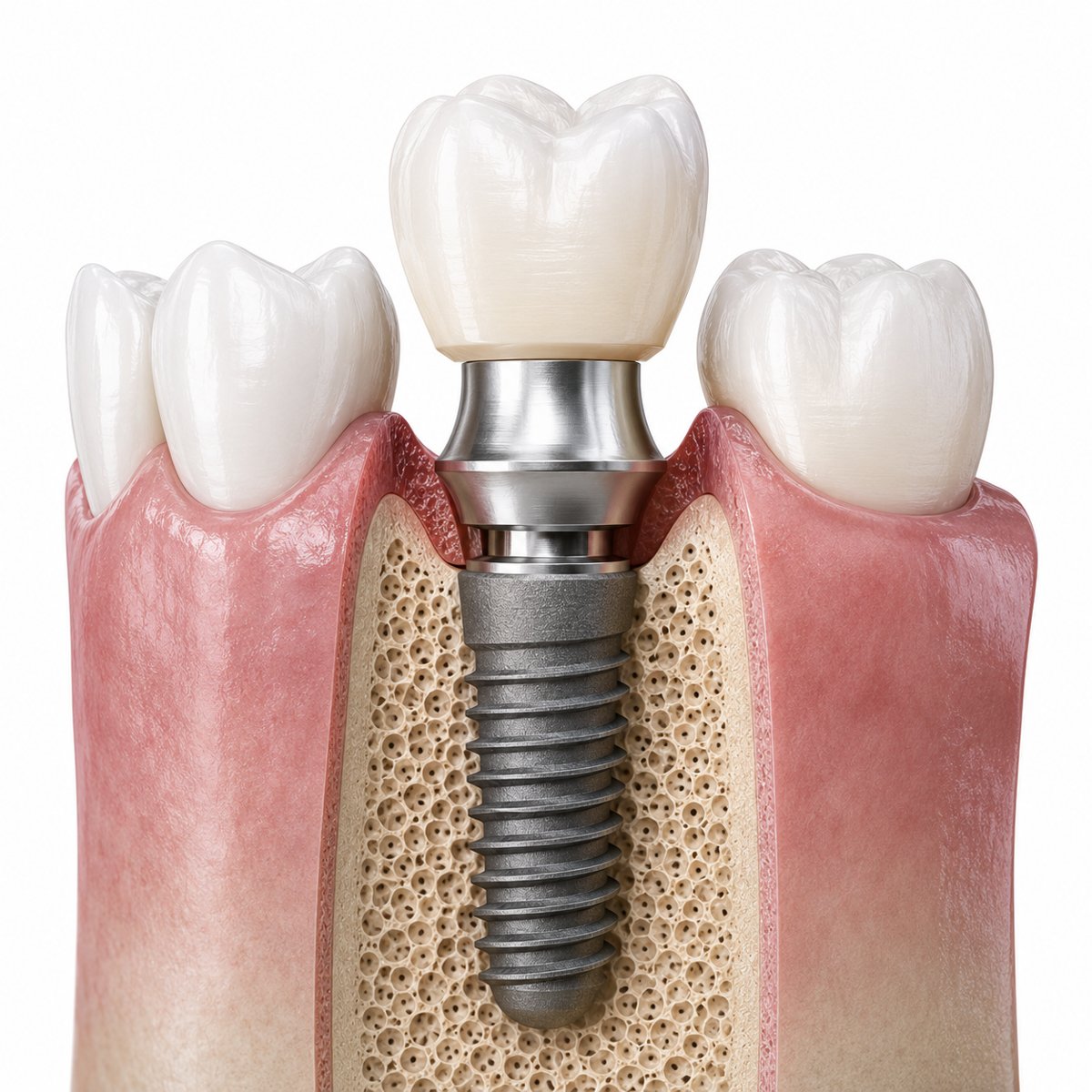
A dental implant is a small screw made of titanium or zirconium that is placed in the jawbone to replace the root of a lost tooth. Over time, this screw fuses with the bone (osseointegration) and forms a permanent foundation. Together with the artificial tooth (crown) placed on top, the implant fully replaces both the appearance and the function of a natural tooth.
The key feature that sets an implant apart from other tooth replacement methods is that it offers a solution at the root level. While a bridge or denture only replaces the visible part, meaning the crown of the tooth, an implant also replaces the root of the missing tooth. This way the jawbone continues to be stimulated and bone loss is prevented.
The Main Components of an Implant
A dental implant consists of three main parts:
Implant Screw: This is the part made of titanium or zirconium and placed directly into the jawbone. It acts as the root of the natural tooth. Titanium is not perceived as a foreign substance by the body, which allows it to integrate with the bone extremely well.
Abutment (Connector): A small intermediate piece that connects the implant screw to the artificial tooth. It sits at gum level and allows the crown to seat securely.
Crown (Artificial Tooth): The part visible from the outside that imitates the natural tooth. It is usually made of zirconium or a porcelain-metal alloy; its color, shape, and size are custom designed to match the neighboring teeth.
How Does an Implant Work? The Osseointegration Process
The secret of an implant's success lies in a biological process called osseointegration. After the titanium screw is placed in the jawbone, bone cells attach to the surface of the screw and begin to grow. Within weeks, the implant becomes an inseparable part of the bone.
Once this process is complete, the implant forms a stable, permanent foundation that is extremely resistant to chewing forces. Osseointegration takes an average of 6–8 weeks in the lower jaw and 10–12 weeks in the upper jaw.
Who Can Have a Dental Implant?

Implants can be placed in a much wider group of patients than people think. The basic requirements are sufficient bone tissue, healthy gums, and a general health condition that allows implant treatment.
Suitable implant candidates
Adults over 18, whose jawbone has finished developing, can be implant candidates. Having sufficient bone height and density is one of the basic requirements; however, if bone is insufficient, this problem can largely be solved with bone graft procedures. People with healthy gums and no active periodontitis (gum inflammation) are suitable for implant treatment. Non-smokers, or those willing to quit, achieve much higher success rates than smokers. Maintaining regular oral hygiene habits and committing to attend follow-up visits after treatment are also important criteria.
Temporary contraindications, meaning situations in which implants are not possible now but may be possible later: Implant placement is postponed in cases of uncontrolled diabetes, active gum disease, active cancer treatment (chemotherapy/radiotherapy), a recent heart attack or stroke, use of bisphosphonate medication, and during pregnancy. For the vast majority of these conditions, implants become possible once the condition has been treated or brought under control.
Permanent contraindications
Severe damage to the jawbone caused by radiotherapy, serious systemic diseases that prevent healing, and advanced bone loss that cannot be corrected even with a bone graft may constitute permanent contraindications. However, these situations are quite rare.
What Are the Types of Implants?
Not all implants are the same. Different implant systems are used depending on the patient's bone structure, the number of missing teeth, and general health condition.
Endosseal (Intraosseous) Implant
This is the most commonly used type of implant. The titanium screw is placed directly into the jawbone. It is the standard choice for patients with sufficient bone height and density. It offers a wide range of applications, from a single missing tooth to a completely toothless jaw.
All-on-4 Implant
This is a system developed for patients who have lost all their teeth or are about to. The entire jaw is restored with a fixed prosthesis supported by just 4 strategically placed implants. In most cases a bone graft is not required, and temporary fixed teeth can be fitted on the same day. It is an ideal option for patients who wear a removable full denture and are looking for a more permanent solution.
All-on-6 Implant
This is the version of All-on-4 performed with 6 implants. Thanks to the greater number of support points, chewing forces are distributed more evenly. It may be preferred over All-on-4 in patients whose bone structure and anatomical conditions are suitable.
Mini Implant
Mini implants, which have a thinner diameter than standard implants, offer an alternative solution when bone volume is insufficient and grafting is not possible. They are also frequently used to stabilize a removable lower jaw denture.
Zygoma (Cheekbone) Implant
This is an advanced technique used in cases where severe bone loss has occurred in the upper jaw and standard methods, including sinus lifting, are insufficient. The implant is placed in the cheekbone (zygoma) instead of the jawbone. This method, which requires special training and experience, can offer a solution to patients who have been told "implants are not possible for you."
Subperiosteal Implant
This is a special type of implant placed not inside the bone but on top of the bone, beneath the gum. It is preferred in rare cases for patients whose bone height is extremely insufficient and who cannot accept a graft.
What Is the Difference Between an Implant, a Bridge, and a Denture?
There are three basic options for treating missing teeth: an implant, a fixed bridge, and a removable denture. Each has its own advantages and limitations. The right choice depends on the number of missing teeth, bone structure, budget, and the patient's expectations. However, when long-term results are evaluated, the advantages offered by implants stand out clearly from the other options.
What Is a Fixed Bridge? Why Is It Chosen?
A fixed bridge is a traditional method in which the healthy teeth on both sides of the missing tooth are ground down and used as supports, and the artificial tooth is suspended between them like a bridge. Its advantage is that it can be completed in a shorter time than an implant. However, this advantage comes at a price: two completely healthy teeth are permanently thinned to serve as supports. These teeth will require a crown forever and become more fragile over time. Moreover, a bridge does not stimulate the bone beneath the missing tooth. Because the bone receives no load, it resorbs over the years.
What Is a Removable Denture? Who Is It Suitable For?
A removable denture is an artificial tooth system that can be taken out and put back in, held in place by clasps or adhesive. It is the most affordable option in terms of cost and offers a quick solution for extensive tooth loss. However, the comfort problems that come with removable dentures cannot be ignored. Slipping while eating, noise while speaking, a feeling of pressure on the gums, and the constant need for adhesive are the complaints patients mention most often. In the long term it does not stop bone loss; on the contrary, the bone beneath the denture changes shape over time and the fit of the denture deteriorates.
Comparison of the Three Options
In terms of harm to neighboring teeth, an implant causes no harm to neighboring teeth, whereas with a fixed bridge the healthy teeth on both sides must be permanently ground down. A removable denture does not directly harm neighboring teeth either.
In terms of preventing bone loss, an implant is the only method that prevents bone resorption by stimulating the jawbone. A fixed bridge and a removable denture cannot stop bone loss; bone resorption continues over time.
In terms of natural feel and comfort, an implant offers the highest comfort and is indistinguishable from a natural tooth. A fixed bridge provides a moderate level of comfort, while a removable denture is the lowest option in terms of comfort.
In terms of chewing strength, an implant provides chewing force equivalent to a natural tooth. A fixed bridge provides a moderate level of chewing strength, while chewing capacity with a removable denture is markedly limited.
In terms of lifespan, an implant can last 20–30 years or more, while a fixed bridge lasts 10–15 years on average and a removable denture 5–8 years.
In terms of ease of care, an implant is brushed and cleaned like a natural tooth. A fixed bridge requires a moderate level of care, while a removable denture must be taken out and cleaned separately.
In terms of aesthetic result, an implant offers excellent aesthetics. A fixed bridge gives a good aesthetic result and a removable denture a moderate one.
In terms of treatment time, implant treatment takes 3–6 months, while a fixed bridge can be completed in 2–4 weeks and a removable denture in 1–3 weeks.
In terms of initial cost, an implant has a high initial cost. A fixed bridge stands out with a medium and a removable denture with a low initial cost.
In terms of long-term cost, however, the picture reverses: Because an implant does not need replacement for decades, it becomes the most economical option. A fixed bridge needs periodic replacement, so its medium-term cost rises, while a removable denture, with its need for frequent replacement, becomes the most costly option in the long run.
Which Is More Economical in the Long Term?
The initial cost of an implant is higher than that of a bridge or denture. However, a bridge needs to be replaced every 10–15 years on average; with each replacement the supporting teeth are weakened further and additional treatment costs arise. A removable denture is replaced every 5–8 years; because the bone beneath it resorbs, each new denture fits less well and causes more problems. An implant, on the other hand, can function for 20–30 years, or even a lifetime, with regular care. From this perspective, an implant becomes the most economical option over the decades.
Think of it this way: A bridge or denture is like renting: you pay again every few years. An implant is like buying: you pay more at the start, but it belongs to you for decades.
Which Option in Which Situation?
If a single tooth is missing and there is sufficient bone, an implant is the most suitable option. If the budget is limited for a single missing tooth, a temporary bridge can be placed, and you can switch to an implant later. For three to four consecutive missing teeth, an implant or an implant-supported bridge is preferred. For a completely toothless jaw, an All-on-4 or All-on-6 implant system is used. If a temporary solution is wanted, a removable denture can be considered a short-term option. When a bone graft cannot be accepted, a subperiosteal implant or a bridge can be offered as an alternative.
How Is a Dental Implant Placed? The Treatment Process Step by Step
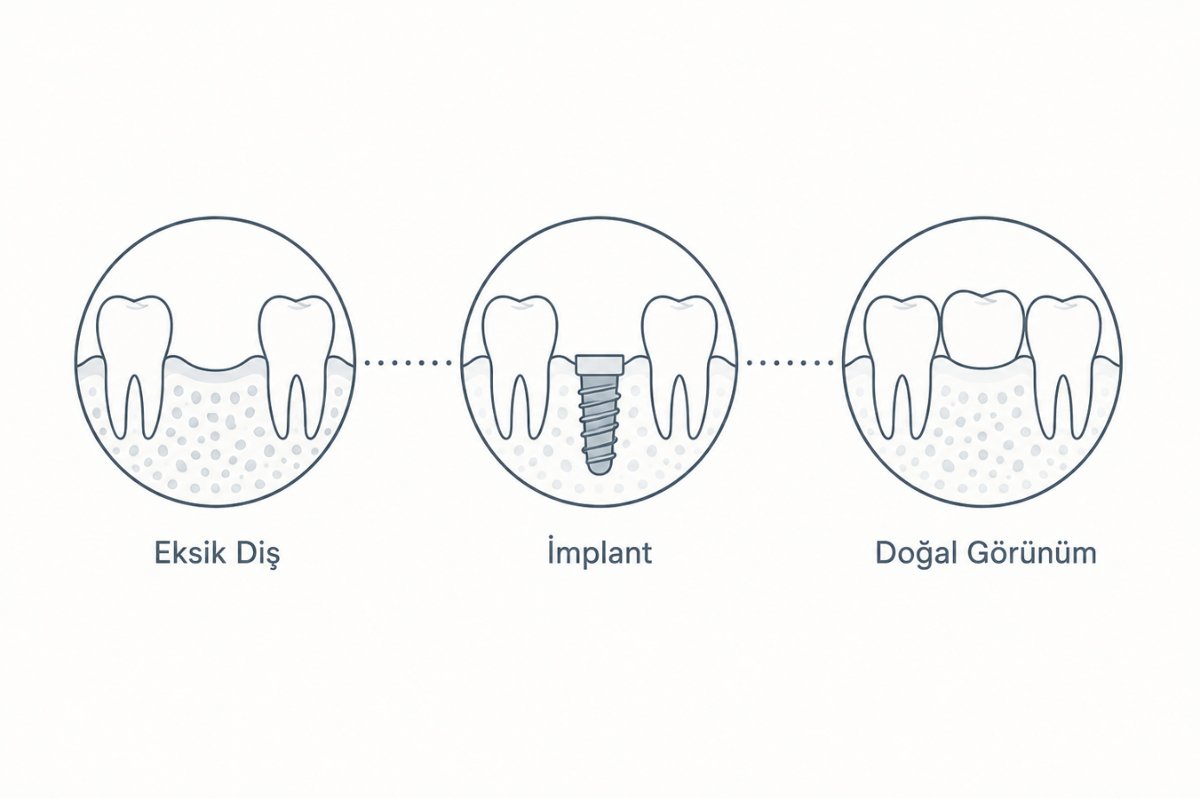
Implant treatment is not a single operation. It is a properly planned, staged process. Each step forms the foundation of the next. Knowing this process in advance helps you set realistic expectations and feel safe throughout the treatment.
Quick Summary: Implant treatment takes 3–6 months on average. Most of this time is not surgery but the waiting period for the bone to fuse with the implant. Active treatment sessions total only a few hours.
Step 1: Examination, Imaging, and Treatment Planning
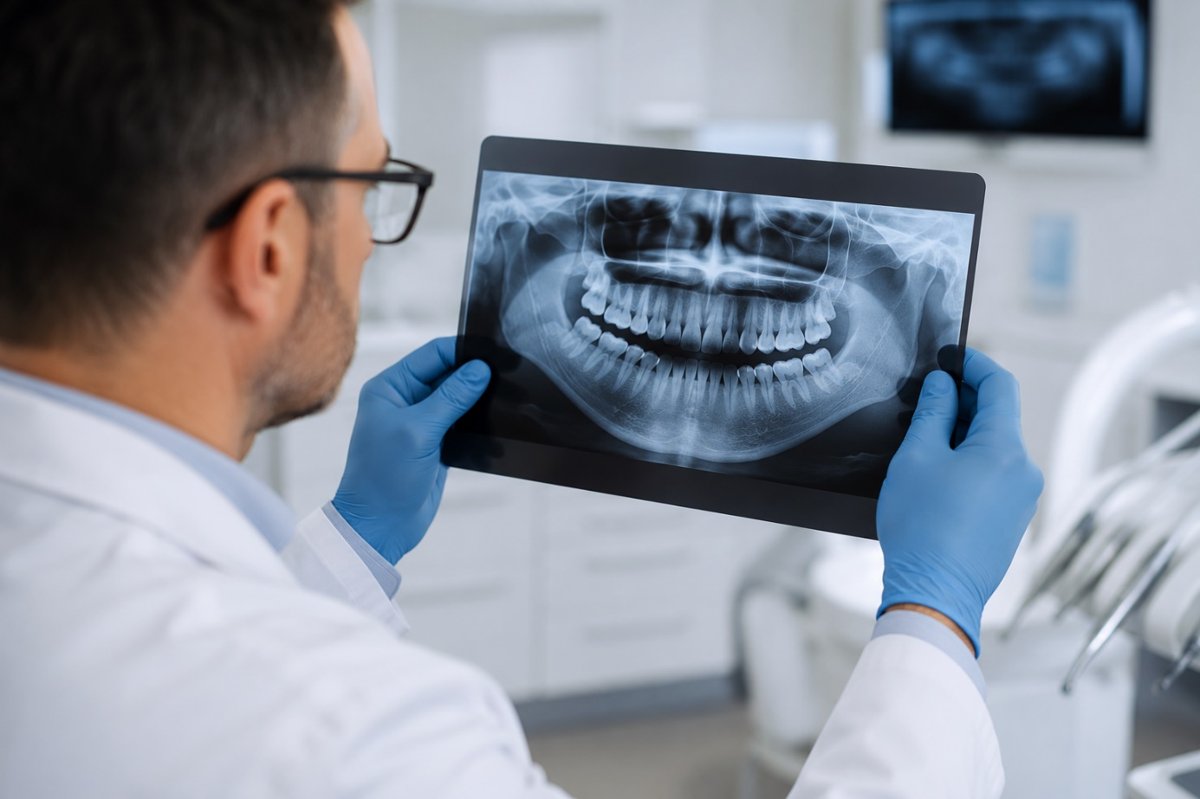
Everything begins with a comprehensive evaluation. A panoramic X-ray is taken to examine the overall structure of the jawbone. With 3D cone beam tomography (CBCT), bone height, density, and sinus position are measured with millimeter precision. Gum health is assessed; if there is an active infection, it is treated first. General health, medications used, and systemic diseases are reviewed. With digital planning software, the exact placement angle and depth of the implant are determined. This stage is the most critical step of the treatment. An implant operation performed without proper planning can lead to serious problems in the years ahead.
Step 2: Preparatory Procedures (If Needed)
This step is not necessary for every patient. However, if the bone structure or gum condition is not suitable, preparation is carried out before the implant.
Gum treatment: If there is active gum inflammation, it is treated first. The implant must be placed in a healthy gum environment.
Bone graft: If bone height or density is insufficient, bone is added to the deficient area. After the graft material has healed, usually in 3–6 months, you move on to the implant placement stage.
Sinus lifting: If the sinus floor is very low in the back of the upper jaw, the sinus membrane is lifted and bone graft is added beneath it. This procedure creates the bone volume needed for the implant.
Preparatory procedures extend the treatment time; however, this time is an investment so that the implant works trouble-free for decades. Practices that skip or shorten the preparation stage increase the risk of failure in the long term.
Step 3: Implant Placement Surgery
Local anesthesia is applied; the area is completely numbed. A sedation option may also be offered to anxious patients. The gum is opened with a small incision. A precise channel is drilled into the bone with special drills. The titanium screw is placed in this channel and the gum is closed. The operation usually takes 30–60 minutes for a single implant. More than one implant can be placed in the same session.
Step 4: Osseointegration — The Bone Accepts the Implant
After the implant is placed, a critical process begins inside the bone: osseointegration. Bone cells attach to the surface of the titanium screw and begin to grow. Within weeks, the implant becomes an inseparable part of the bone. The superstructure is not placed until this process is complete. The osseointegration period averages 6–8 weeks in the lower jaw and 10–12 weeks in the upper jaw. During this period you should eat soft foods, maintain regular oral hygiene, attend follow-up appointments, not smoke, and avoid putting pressure on the implant area.
Step 5: Abutment and Permanent Crown Placement
When osseointegration is complete, the abutment is placed on top of the implant screw. Then a precise impression of the jaw is taken with a digital scan or the traditional impression method. The permanent crown, custom made in the laboratory, is screwed or cemented onto the abutment. The most commonly preferred crown material is zirconium: it contains no metal, offers a natural tooth appearance thanks to its light transmission, and is extremely durable.
Treatment Process Timeline
The examination and planning stage takes 1–2 sessions and includes 3D tomography. If preparatory procedures are needed, they can take between 0 and 16 weeks. The implant placement operation is completed in a single session in about 1 hour. The osseointegration waiting period takes 6–12 weeks. Abutment and crown placement require 1–2 sessions. If no preparatory procedure is needed, the total treatment time is about 3 months; if preparation is needed, it ranges between 3 and 6 months.
Is "Same-Day Teeth" Possible?
In some cases, especially with All-on-4 procedures or single-tooth implants with suitable bone structure, a temporary tooth can be fitted immediately after the implant is placed. This is called the "immediate loading" protocol. However, this temporary tooth is not the permanent crown. It does not bear load until osseointegration is complete; it is for aesthetics and comfort only. Not every patient is suitable for this protocol; suitability is determined by the dentist based on bone density.
Is the Implant Operation Painful? What Is the Recovery Process Like?
The biggest concern of patients considering an implant is usually pain. In this section we answer these questions honestly and with realistic expectations.
Is Pain Felt During the Operation?
The short answer: No. Local anesthesia completely numbs the operation area. Apart from the prick of the needle, no pain is felt throughout the operation. Patients occasionally describe sensations of pressure, vibration, or a slight push; these are normal and should not be confused with pain. Conscious sedation may be offered to patients with a high level of anxiety.
The First 24 Hours After the Operation
After the effect of the anesthesia wears off, mild to moderate pain may be felt. This is completely normal. Expected symptoms include mild to moderate pain, swelling in the operation area, slight bleeding or a pink tinge in the saliva, a feeling of numbness, and slight limitation in jaw movements.
In the first 24 hours, you should take the prescribed antibiotic and painkiller regularly, apply ice to the operation area in 20-minute intervals, rest with your head slightly elevated, drink plenty of water, and eat soft, lukewarm foods. You should not smoke, should not disturb the operation area, should not eat hard or hot foods, should not use a straw, and should avoid intense physical activity.
The First 72 Hours: The Most Critical Period
The first three days after the operation are when healing is most intense. Swelling usually peaks on the second day and then gradually begins to decrease. Pain can be kept largely under control with the prescribed medication. Mild bruising may be seen; this is normal and passes within a few days.
You should contact your dentist if you have pain that lasts longer than three days and keeps increasing, a fever above 38°C, noticeable foul-smelling discharge from the operation area, excessive and uncontrollable bleeding, or a feeling that the implant has moved.
After the First Week: Return to Normal
Most patients return to daily life 3–5 days after the operation. Those with office jobs can usually go back to work the next day; 3–5 days of rest is recommended for those who do heavy physical work. By the end of the first week, swelling largely subsides, and the need for painkillers decreases or disappears.
Recovery Timeline
In the first 24 hours, pain and swelling begin; ice, medication, and rest are recommended. On the second and third days, swelling peaks; the soft diet and the smoking ban continue. From the fourth to the seventh day, swelling decreases, pain eases, and the return to normal begins. In the second week, the gum heals and a follow-up appointment is held. From the sixth week to the twelfth week, the osseointegration process continues; hard foods should be avoided. From the third month to the sixth month, you move on to the crown placement stage and the treatment is completed.
Is There Pain During the Osseointegration Period?
No, this period is usually painless. After the implant has settled in the bone and the gum has closed, the patient returns to normal life. Osseointegration takes place quietly; most patients do not even feel the presence of the implant during this process.
How Many Years Does a Dental Implant Last? Implant Lifespan
With regular care, dental implants can last 20–30 years, or even a lifetime. Scientific studies report the 10-year success rate of implants as above 95%. This rate is well above that of all other tooth replacement methods.
Factors That Affect Implant Lifespan
Smoking is the most important lifestyle factor affecting implant success. Nicotine restricts blood circulation in the gum tissue; this both slows the osseointegration process and accelerates bone loss around the implant in the long term. Research shows that the implant failure rate is 2–3 times higher in smokers than in non-smokers.
Oral hygiene and daily care are also critically important. An implant does not decay; however, the gum and bone tissue around it can become diseased if neglected. This condition, called "peri-implantitis," is inflammation around the implant and, if left untreated, can lead to bone loss and loss of the implant.
Bone density and quality directly affect the long-term success of the implant. Dense, healthy bone tissue holds the implant more firmly. The dentist's experience and surgical technique are also among the determining factors. Placing the implant at the right angle, at the right depth, and in the right location is one of the basic requirements for long-term success.
In terms of implant brand and quality, well-established brands that are FDA or CE approved and supported by clinical studies offer far more reliable results in the long term. Regular follow-up appointments allow possible problems to be detected at an early stage. Professional check-ups and cleaning at least twice a year are very important in this respect.
Implant Lifespan Comparison
A dental implant lasts 20–30 years or more; its 10-year success rate is between 95% and 98%, and only the crown may need to be replaced. A fixed bridge has an average lifespan of 10–15 years, a 10-year success rate of 85–90%, and requires periodic replacement. A removable denture lasts 5–8 years and needs frequent replacement. An implant-supported zirconium crown, on the other hand, lasts 15–20 years and has a 10-year success rate of 90–95%.
How Do You Care for an Implant?
In your daily care routine, you should brush at least twice a day with a soft-bristled brush, use an interdental brush or water flosser to clean around the implant, support your care with an alcohol-free mouthwash, and, if you use dental floss, apply it gently around the implant. You should avoid abrasive toothpastes and excessively hard foods such as ice and hard candy.
In terms of professional care, a dentist check-up and professional cleaning twice a year, an X-ray once a year to monitor bone level, and the use of a night guard if you grind your teeth (bruxism) are recommended.
Does Bruxism (Teeth Grinding) Affect the Implant?
Yes. In patients who clench or grind their teeth during sleep, the excessive force on the implant can, over time, cause the crown to break or lead to bone loss around the implant. A night guard is mandatory for these patients. Having bruxism does not make an implant impossible; it only requires an additional precaution.
What Does an Implant Warranty Mean?
Many clinics offer a lifetime warranty on implants. The warranty usually covers the implant screw. The crown is evaluated separately and lasts 10–15 years on average. Among the warranty conditions is a requirement to attend regular follow-up appointments. Damage caused by smoking or neglect may be excluded from the warranty. When you receive a warranty certificate, be sure to ask about its scope, conditions, and exceptions.
What Factors Affect Implant Prices?
The wide price range encountered when researching implant prices surprises most patients. The reason for this difference is not random; there are many concrete factors that determine the price of an implant.
Important Reminder: An implant is a lifelong investment. The cheapest offer is not the best offer.
1. The Implant Brand and Origin Used
At the top of the factors that affect implant price are the brand and manufacturing quality of the implant system used. Premium European and US brands include Straumann, Nobel Biocare, Osstem, and Zimmer. These brands have decades of clinical data, high success rates, and a global warranty. Mid-range brands include MIS, Megagen, and Dentium; they offer a balance of good quality and reasonable price. Locally produced, CE-approved brands made in Turkey are affordably priced but have a shorter clinical history. Implants of unclear brand and unknown origin are low priced; however, they carry long-term risk.
2. Superstructure (Crown) Material
A zirconium crown offers excellent aesthetics; thanks to its light transmission it gives the result closest to a natural tooth, its durability is very high, and its cost is in the high category. A porcelain-metal crown offers good aesthetics but the metal substructure may become visible over time; its durability is high and its cost is medium. A full ceramic crown offers very good aesthetics, with medium durability and a cost between medium and high. A metal crown is poor in terms of aesthetics but has very high durability and low cost.
3. Need for Additional Procedures
Some patients need preparatory procedures before the implant. Additional procedures such as bone graft, sinus lifting, gum treatment, tooth extraction, and a temporary denture increase the treatment cost. The need for these procedures varies from patient to patient. A price quote given without a comprehensive examination may not reflect the real cost.
4. The Clinic's Level of Technology and Equipment
Technological investments such as 3D cone beam tomography (CBCT), digital implant planning software, digital impressions (intraoral scanner), an in-house CAD/CAM laboratory, and sedation infrastructure affect the price; however, in return they offer safer and more predictable results.
5. The Dentist's Level of Expertise and Experience
A specialist dentist with experience in hundreds or even thousands of implant operations charges higher fees. An experienced implantologist anticipates complications in advance, comes up with safer solutions in difficult cases, and has a statistically lower failure rate.
6. Clinic Location
The difference in rent, staff, and overhead costs between a clinic in a central district of İstanbul and a clinic in a small town in Anatolia is reflected in the prices. This difference does not always mean a difference in quality.
5 Questions to Ask When Getting a Price Quote
- Which brand of implant will be used, and does it have FDA or CE certification?
- What material will the crown be made of, zirconium or porcelain-metal?
- Are bone graft or sinus lifting included in this price?
- What does the warranty cover, and are the crown and screw each under warranty separately?
- Are follow-up appointments and management of possible complications included in the price?
When comparing prices, compare apples with apples. Quotes obtained for the same brand of implant, the same crown material, and the same scope can be meaningfully compared.
Installment and Payment Options
Many clinics offer flexible payment options: these include credit card installments of 6–12–18 months, in-clinic installment plans, and partial coverage of implants by some private health insurance plans.
Frequently Asked Questions
How many years does a dental implant last?
With regular care and professional check-ups twice a year, dental implants can function for 20–30 years, or even a lifetime. Scientific studies report the 10-year success rate of implants as above 95%. The crown, depending on the material, may be replaced every 15–20 years; however, the titanium screw underneath remains in the bone.
Is the implant operation painful?
Because the operation is performed under local anesthesia, no pain is felt during the procedure. A slight feeling of pressure and vibration is normal. After the anesthesia wears off, there may be mild to moderate pain; this is easily controlled with the prescribed painkiller.
Can implants be placed in smokers?
Yes, they can; however, smoking significantly increases the risk of implant failure. Research shows that the failure rate in smokers is 2–3 times higher than in non-smokers. Not smoking for at least 2 weeks before the operation and at least 8 weeks after it is recommended.
Can I have an implant if I have bone loss?
In most cases, yes. In patients with insufficient bone density or height, implant placement can be made possible with preparatory procedures such as a bone graft or sinus lifting. In severe upper jaw bone loss, zygoma implants offer an alternative solution.
Can implants be placed in diabetic patients?
Implants can be placed in patients with controlled diabetes. The determining factor is that the HbA1c value is below the accepted threshold. Uncontrolled diabetes, on the other hand, is a temporary contraindication that must be corrected before the implant.
What is the difference between an implant and a bridge?
An implant is an independent structure that replaces the root of the missing tooth; it does not touch the neighboring teeth and prevents bone loss. A bridge, on the other hand, requires the healthy teeth on both sides of the missing tooth to be ground down. An implant lasts 20–30+ years, while a bridge lasts 10–15 years on average.
When can I eat after an implant?
In the first 24 hours after the operation, only cold or lukewarm soft foods should be eaten. During the first week, hard, crunchy, and spicy foods should be avoided. After the permanent crown is placed, you can return to a normal diet.
What is an All-on-4 implant, and who is it suitable for?
All-on-4 is an implant system developed for patients who have lost all their teeth or are about to. The entire jaw is restored with a fixed prosthesis supported by just 4 strategically placed implants. It is ideal for patients who wear a removable full denture and are looking for a more permanent solution.
How many sessions does implant treatment take?
Although the total treatment time is 3–6 months, the number of active sessions is quite small. The initial examination and planning take 1–2 sessions, the implant placement operation 1 session, the osseointegration waiting period 6–12 weeks (with no sessions), and crown placement 1–2 sessions.
Can implants be placed in children?
Implants cannot be placed before bone development is complete. The generally accepted lower age limit is 16–17 for girls and 17–18 for boys. Until that age, temporary solutions can be used.
What factors affect implant prices?
The main factors that determine the price of an implant are as follows: the brand and origin of the implant used, the crown material, the need for additional procedures (bone graft, sinus lifting), the clinic's level of technology and equipment, and the dentist's expertise and experience.
What does an implant warranty mean?
An implant warranty usually covers the titanium screw. The crown is mostly evaluated separately. Among the warranty conditions is a requirement to attend regular follow-up appointments; damage caused by smoking or neglect may be excluded from coverage.
Get Information About Implant Treatment
Book an appointment now for a free consultation with our specialist dentists.
Book an Appointment