What Is a Zirconium Crown? How Is It Made? Everything You Need to Know
"I want my teeth crowned, but I don't want metal." For every patient who says this, the first option that comes to mind is now zirconium. And this preference is no coincidence.
Over the past decade, zirconium crowns have become the most talked-about restorative material in dentistry. The reason is simple: they contain no metal, they let light pass through, they don't irritate the gum, and they last for decades.
But what does "zirconium" actually mean, how is it made, how does it differ from a porcelain crown, who is it suitable for, and does it have any drawbacks? We cover all of this step by step in this guide.
What Is a Zirconium Crown?
A zirconium crown is a dental crown system made from a ceramic-based material called zirconium dioxide (ZrO₂). In the medical and dental literature it is known as a zirconia crown.
Unlike traditional metal-supported porcelain crowns, zirconium is completely metal-free. This gives it several critical advantages: no gray line appears at the gum, the risk of allergy is almost zero, and thanks to its light transmission a look much closer to a natural tooth is achieved.
Although zirconium comes from the ceramic family by chemical structure, it has outstanding mechanical strength. This strength makes it suitable both for aesthetic restorations on the front teeth and for high-force areas on the back teeth.
What Is the Difference Between Zirconium and Porcelain Crowns?
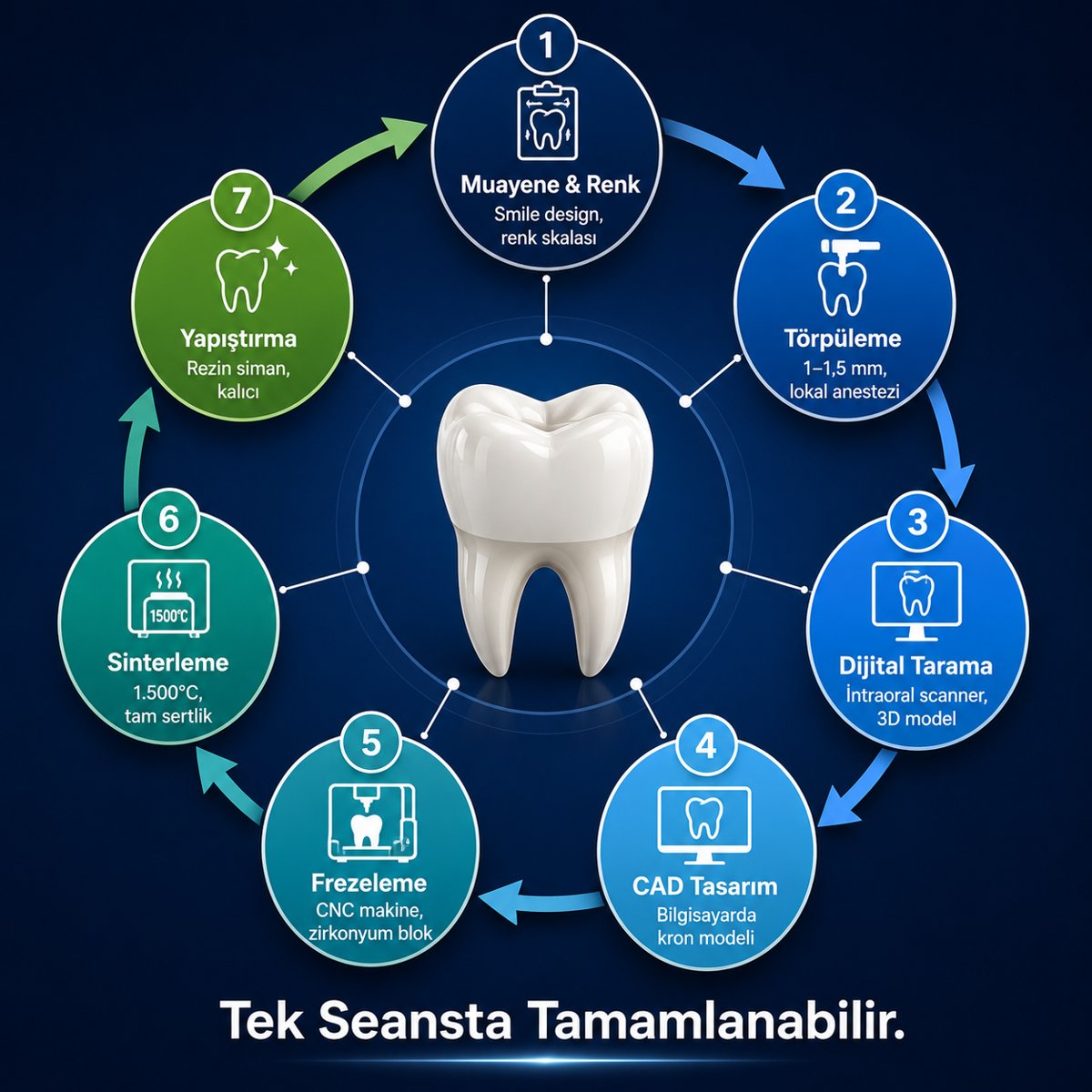
These two materials are often confused. Clearly understanding the difference is critical for choosing the right restoration.
A classic metal-supported porcelain crown is made by adding an outer layer of porcelain (ceramic) over a metal substructure. Over the years, as the gum recedes, the metal substructure becomes visible and a dark line appears at the neck of the tooth, causing an aesthetic problem. In addition, the risk of an allergic reaction to metal, especially with nickel-containing alloys, cannot be ignored.
An all-ceramic porcelain crown, on the other hand, is metal-free, but it is not as hard as zirconium. Its risk of fracture is higher, so its use in back-tooth restorations is limited.
A zirconium crown combines the best features of these two worlds: the strength of a metal-supported crown, and the aesthetics and biocompatibility of all-ceramic.
Advantages of Zirconium Crowns
- Contains no metal: No risk of allergic reaction, no discoloration at the gum.
- High aesthetics: Thanks to light transmission, the color and brightness match with neighboring teeth is far more natural.
- Superior strength: Comparable in strength to metal-supported crowns against biting and chewing forces.
- Biocompatibility: It is compatible with the body and has no irritating effect on gum tissue.
- Long lifespan: With proper placement and care, 15–20 years or more of use is possible.
- MRI compatible: Because it is non-metallic, it causes no problems in magnetic resonance imaging.
- Protects gum health: The tendency for plaque buildup seen with metal crowns is much lower with zirconium.
- Low thermal conductivity: Sensitivity to hot and cold stimuli is felt less.
Disadvantages of Zirconium Crowns
No material is perfect. Zirconium also has limitations worth knowing about:
- Risk of opacity: Monolithic (single-block) zirconium in particular may look slightly more matte in some cases compared with layered ceramic alternatives. This difference can be noticeable in the front area.
- The tooth must be reduced: Like any crown, zirconium requires a certain amount (1–1.5 mm) to be shaved from around the tooth being crowned. This is an irreversible procedure.
- Difficult to repair: When zirconium breaks, it is harder to repair than porcelain crowns; the crown usually needs to be completely replaced.
- Cost: The initial cost is higher than that of full porcelain and metal-supported crowns. However, long-term durability can make up for this difference.
Who Is It Suitable For?
Zirconium crowns appeal to a wide range of patients:
- Those who want to replace old metal-supported crowns: Patients who complain about the gray line at the neck of the tooth and the metallic appearance.
- People with metal allergies: Individuals who have developed a reaction to alloys containing nickel, cobalt or chromium.
- Those who need both front and back restorations: Zirconium is suitable for both areas, with strength coming to the fore on the back teeth and aesthetics on the front teeth.
- Root canal-treated teeth: An ideal option for protecting teeth that have lost their vitality and are therefore more prone to fracture.
- Those with teeth grinding (bruxism): Monolithic zirconium, with its structure resistant to excessive force, is preferred for this patient group.
- Those who want a Hollywood Smile or full-mouth restoration: In cases where many teeth are restored at the same time, zirconium provides consistent aesthetics.
How Is a Zirconium Crown Made? Step by Step
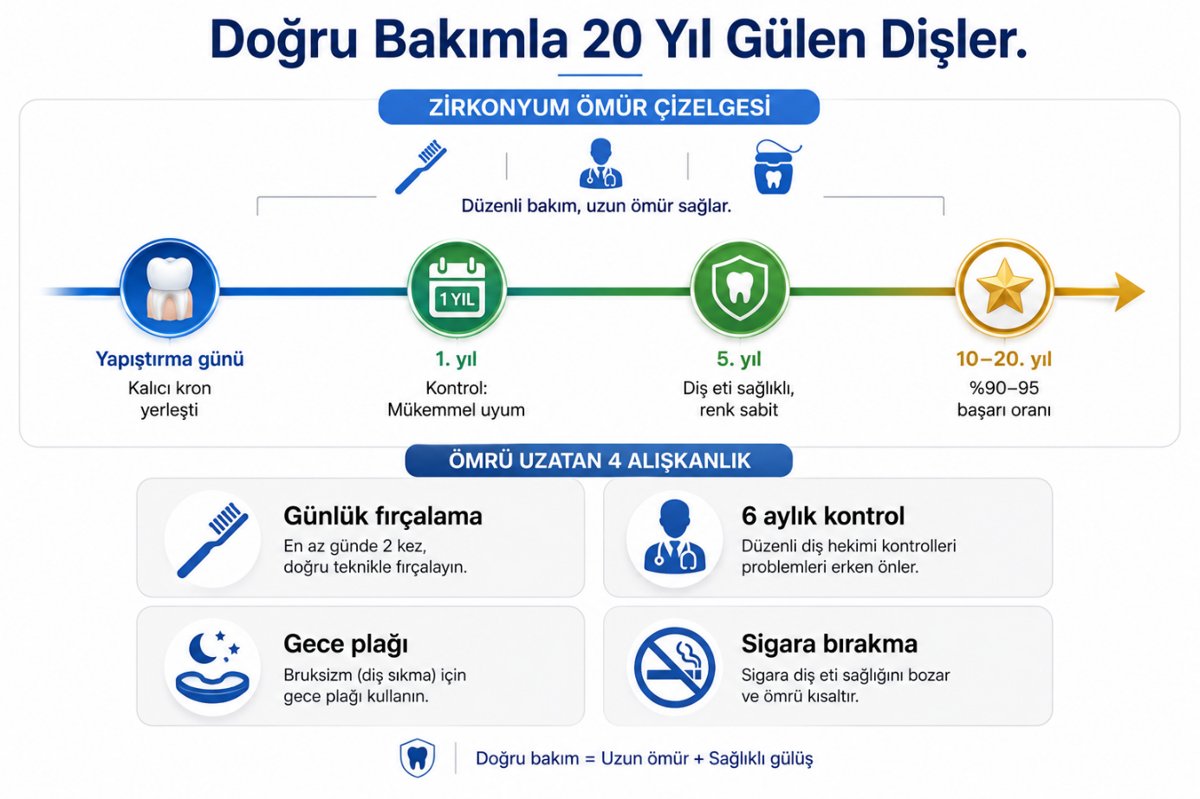
Examination and Planning
Every restoration process begins with a proper evaluation. At this stage the dentist:
- Examines the tooth root and supporting tissue with X-rays and, if necessary, tomography
- Evaluates existing crowns, fillings or root canal treatments
- Determines the shade, selecting a color scale that matches the neighboring teeth and the patient's skin tone
- Analyzes how many teeth will be crowned and the occlusion (bite balance)
- May create a digital or analog smile design
Preparing the Tooth: Reduction
For the zirconium crown to fit on the tooth, a certain amount of material must be removed from every surface of the tooth to be treated. This procedure is called preparation or reduction.
For a standard zirconium crown, approximately 1–1.5 mm is removed from each surface. With thinner-design (ultra-thin) zirconium systems, this amount can drop to 0.5 mm.
The reduction is performed under local anesthesia. No pain is felt during the procedure; a slight warmth and vibration may be perceived along with the cooling water.
The quality of the preparation directly affects the fit and long-term success of the crown. For this reason, a precise reduction performed by experienced hands is one of the cornerstones of the treatment.
Taking the Impression
One of two methods is used for the prepared tooth:
- Traditional impression: A tray impression made with alginate or polyvinyl siloxane (PVS) material. It is sent to the laboratory.
- Digital impression (intraoral scanner): The inside of the mouth is scanned in 3D within seconds using a handheld scanner. No tray or impression material is needed, and patient comfort is much higher. The 3D model produced is transferred directly to the CAD/CAM software.
Temporary Crown
While the permanent zirconium crown is being prepared (usually 3–7 business days), the reduced tooth is not left exposed. A temporary crown made of acrylic or composite is cemented on. The temporary crown:
- Protects the tooth against external stimuli
- Maintains aesthetic continuity
- Temporarily takes over the chewing function
Careful use of the temporary crown is recommended; hard and sticky foods should be avoided.
CAD/CAM Design and Milling
In the laboratory, or directly in the clinic if the CAD/CAM system is in-house, the digital model of the zirconium crown is prepared.
- CAD (Computer Aided Design): The dentist or dental technician designs the form, size and connection points of the crown in digital software. The relationship with neighboring teeth, occlusal contacts and the gum margin are determined with millimeter precision.
- CAM (Computer Aided Manufacturing): Once the design is complete, a CNC milling machine automatically processes the zirconium block and shapes it into the crown form. This process takes 15–45 minutes.
Sintering
The zirconium crown that comes out of milling has not yet reached its full hardness. Its color is pale and its structure is relatively fragile.
It is fired for several hours in a sintering furnace at a temperature between 1,450 and 1,550°C. During this process:
- The material reaches its full hardness and density
- The color sets and deepens
- The volume shrinks slightly; this shrinkage is accounted for in advance in the CAD design
Sintering is the critical stage where zirconium gains its strength.
Characterization and Glaze
After sintering, the crown moves on to the staining and characterization stage:
- Natural tooth color effects are added with ceramic stains (spots, translucency, opacity gradient)
- Natural surface texture and characteristic lines on the tooth are crafted by hand
- Finally, glaze (a polishing firing process) is applied, making the surface smooth, shiny and resistant to plaque
In front-area cases requiring high aesthetics, an additional porcelain layer can also be added over the zirconium substructure. While this method gives the highest aesthetic result, it also brings a higher risk of fracture.
Try-In and Permanent Cementation
When the crown arrives at the clinic, a try-in is performed first:
- Color check (comparison with adjacent teeth, evaluation under different lighting conditions)
- Fit check (harmony with the gum margin, contact with neighboring teeth)
- Occlusion check (contact between upper and lower teeth, bite balance)
Once everything is approved, the temporary crown is removed, the tooth surface is prepared, and the zirconium crown is permanently cemented with a resin-based adhesive cement. Excess cement is cleaned away and a final bite check is performed.
The treatment is complete.
How Long Does the Treatment Take?
- Classic method (laboratory): Preparation + impression at the first session; a 5–10 business day laboratory process; cementation at the second session. Two clinic visits in total.
- CAD/CAM (CEREC / digital workflow): Preparation, scanning, design, milling, sintering and cementation can be completed on the same day. A single session of 2–3 hours.
In cases where many teeth are restored (Hollywood Smile, full-mouth restoration), planning, temporization and the laboratory process may take longer.
How Many Years Does a Zirconium Crown Last?
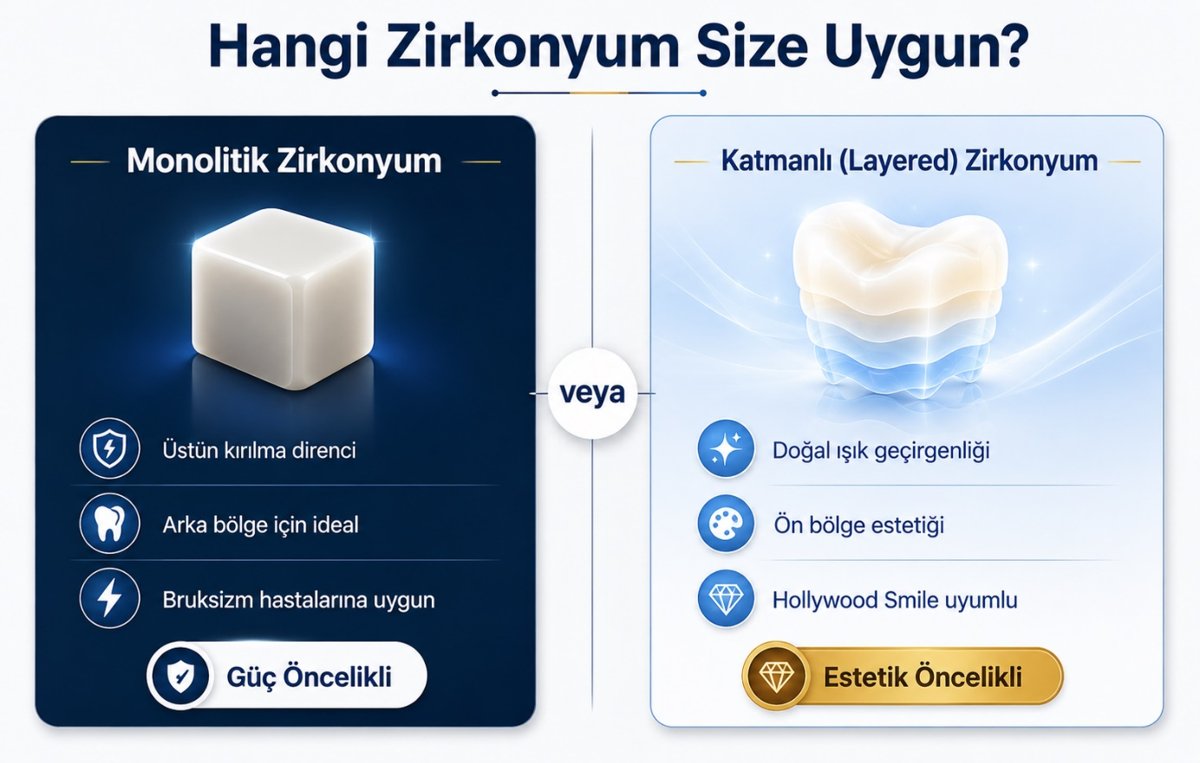
Clinical studies show that the 10-year success rate of properly made zirconium restorations is around 90–95%. Cases of trouble-free use for twenty years or more are becoming increasingly common.
The main factors affecting lifespan:
- Quality of preparation and cementation technique
- The patient's oral hygiene
- Presence and control of bruxism (teeth grinding)
- Regular check-ups and professional cleaning
- Eating habits (excessively hard foods can crack the porcelain layer of the crown)
Care After a Zirconium Crown
- Brushing twice a day: The crown margin area and the gum line should be cleaned carefully.
- Dental floss and interdental brush: Prevents plaque buildup on the sides of the crown.
- Check-up every 6 months: Cementation integrity, gum condition and occlusion are evaluated.
- Night guard if you have bruxism: Essential for protecting the crown from excessive force.
- Be careful with hard and sticky foods: Habits such as chewing ice or cracking hard-shelled hazelnuts increase the risk of fracture.
Types of Zirconium: Monolithic or Layered?
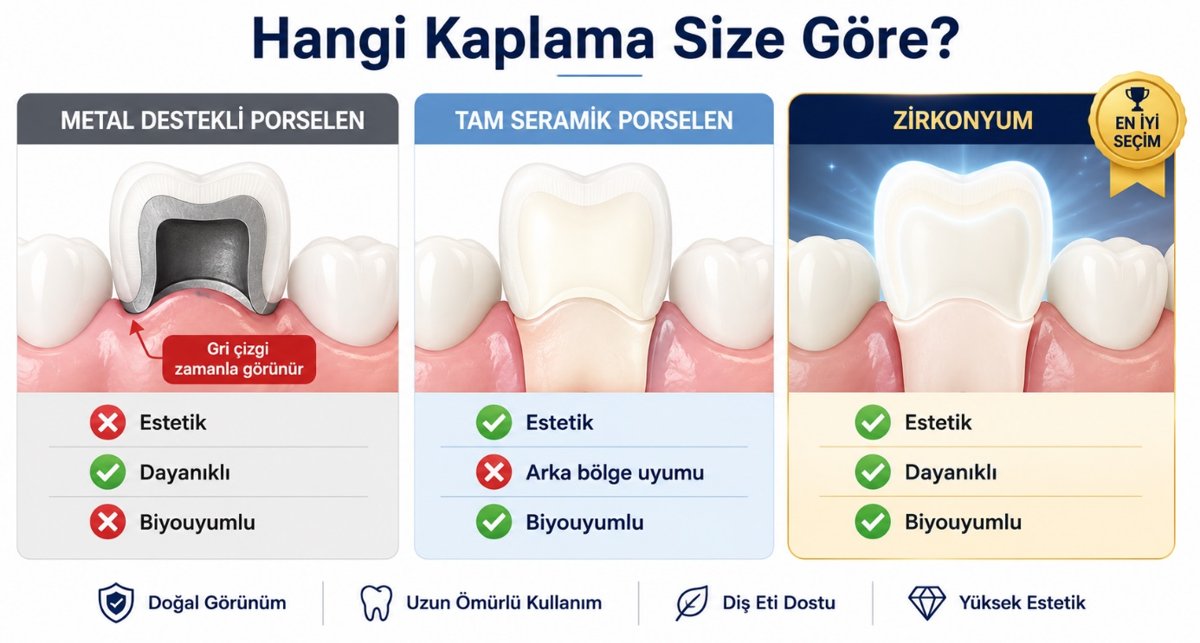
Zirconium itself comes in different design options:
Monolithic Zirconium
A crown milled from a single block of zirconium, with no porcelain layer. Extremely durable and the first choice for the back area. It may look slightly opaque.
Layered Zirconium
Aesthetic depth is increased by adding a porcelain layer over the zirconium substructure. Preferred in the front area. The risk of chipping in the porcelain layer is higher.
Ultra-Translucent Zirconium
A latest-generation formulation providing high light transmission. Despite being monolithic, it offers porcelain-like aesthetics. It can be used for both front and back areas.
Frequently Asked Questions
Is a zirconium crown painful?
Because the preparation is performed under local anesthesia, no pain is felt during the procedure. Mild sensitivity for the first few days after the crown is placed is considered normal.
Does the color of a zirconium crown change over time?
Because the zirconium surface is non-porous and smooth, it is resistant to tea, coffee and cigarette stains. With proper polishing, color change is very low.
I smoke. Can I get zirconium?
Yes, you can; however, smoking negatively affects gum health and in the long term may lead to gum recession at the crown margin.
How much of the tooth is cut when a zirconium crown is made?
For standard zirconium, approximately 1–1.5 mm from each surface. With ultra-thin systems it can go down to 0.5 mm. In teeth that already have a large filling or root canal treatment, this amount is already reduced.
What can I eat while wearing the temporary crown?
Soft, lukewarm foods should be preferred. Hard, sticky and very hot foods should be avoided. The temporary crown is held in place not with the final cementation but with temporary cement; it can come off easily.
What is the difference between zirconium and a laminate veneer?
A laminate veneer covers only the front surface of the tooth, is a very thin layer and requires very little reduction. A zirconium crown, on the other hand, wraps around the entire surface of the tooth. Laminate is the more conservative option, zirconium the more comprehensive restoration option.
Is zirconium used for a Hollywood Smile?
Yes. Zirconium is the most commonly used material in Hollywood Smile restorations. In particular, a combination of ultra-translucent and layered zirconium offers a high aesthetic result.
Can a zirconium crown come off or fall out?
When cementation is done correctly and the tooth preparation is adequate, unintended loosening is extremely rare. If it does come off, the crown can most often be re-cemented provided it is undamaged.
Is it done on a single tooth or on many teeth?
Both are possible. It is used for single-tooth restorations (including crowns on implants) as well as in full-mouth cases where the entire mouth is restored.
Conclusion: Who Is Zirconium the Right Choice For?
A zirconium crown is today's leading solution for replacing worn-out metal-supported crowns, protecting root canal-treated or heavily filled teeth, aesthetics-focused restorations, and individuals with metal allergies.
However, like any restoration, zirconium does not give everyone the same result. The current condition of the tooth, bone and gum health, the patient's habits and the clinician's experience: the balance of these four factors determines the final outcome.
The right decision: see a specialist, have an evaluation with digital imaging, and build your treatment plan in an informed way.
Get an Expert Opinion on Zirconium Crowns
Get a free consultation with our specialist dentists for the crown solution that suits you best.
Book an Appointment